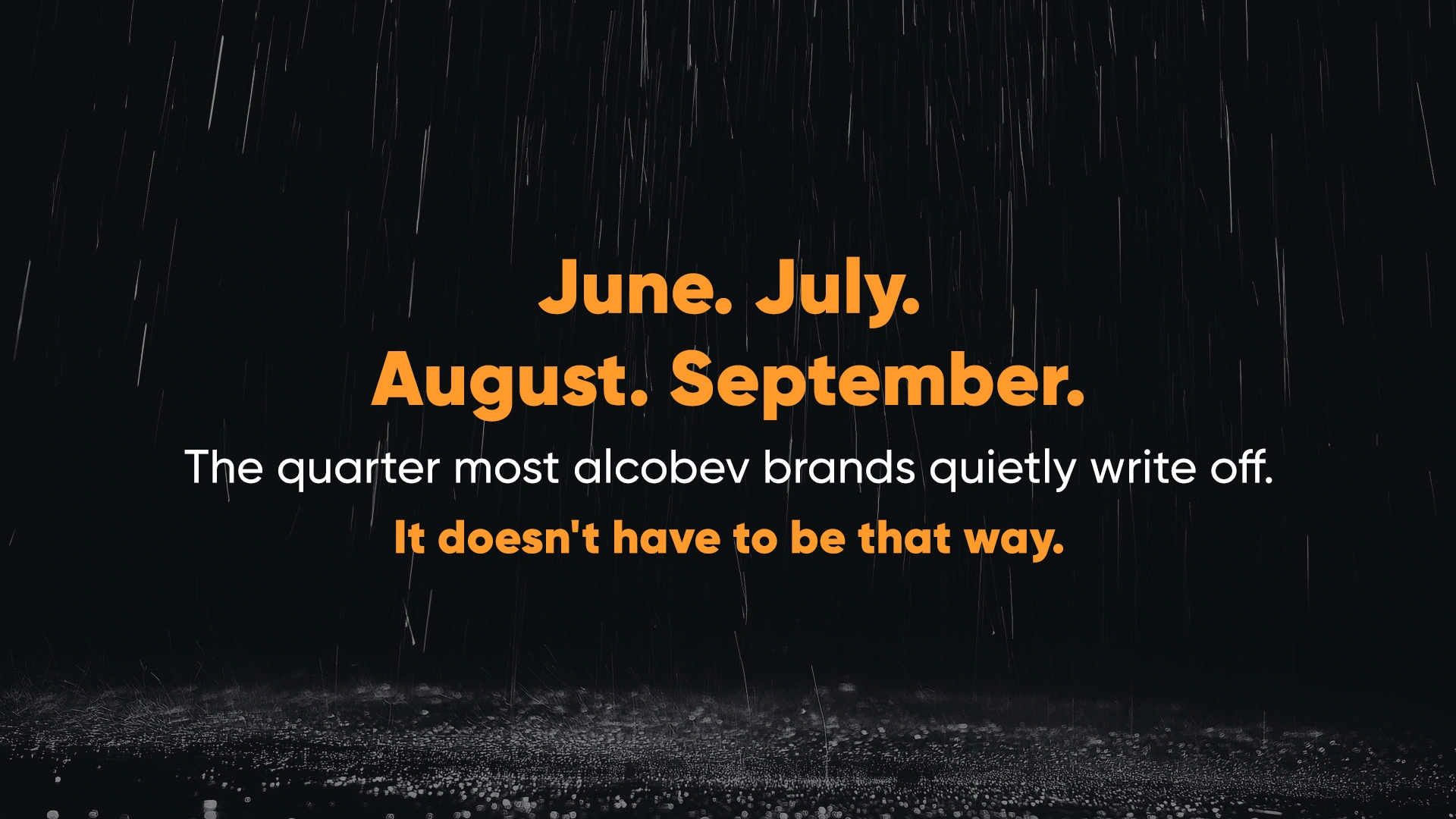
In the Indian alcobev calendar, June to September is the quarter most brands quietly dread. Beer volumes soften. Bars empty out on rainy evenings. Distributor meetings get uncomfortable. And somewhere in the middle of it all, maybe a business head says the thing everyone is thinking: “It’s just the monsoon. Nothing we can do.”
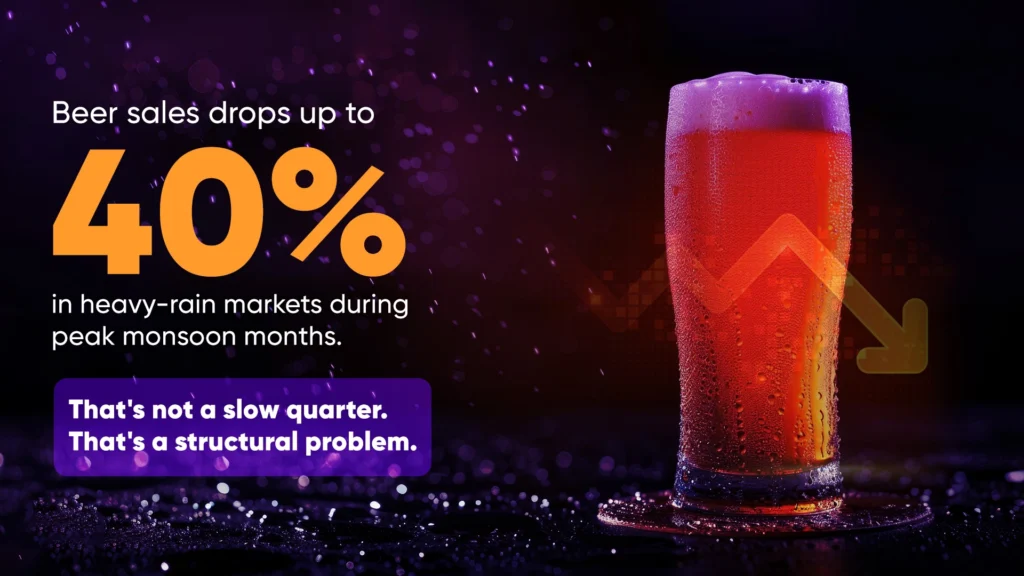
The trouble with that sentence is not that it is wrong. Beer sales in India have been documented to drop 30 to 40% in heavy-rain markets during peak monsoon months. In Q2 FY26, United Breweries reported a 65% decline in consolidated net profit, with their CEO attributing it directly to an unusually strong monsoon and flooding across three of their breweries. The numbers are real. The seasonality is real.
The trouble is the second part. “Nothing we can do.”
Because that is not quite true, and the brands that believe it tend to prove it by spending the quarter on the back foot, waiting for September to end so they can get back to planning. Meanwhile, the brands that treat the monsoon as a distinct marketing problem with its own consumer behaviour, its own channel dynamics, and its own promotional logic tend to come out of it in meaningfully better shape heading into the festive season.
This is not a piece about denying the monsoon headwind. It is about building a plan for it.
Before we get into this, here are a few relevant resources from Buyerr:
- Consumer Promotions for FMCG and Alcobev Brands
- Retail and On-Pack Promotion Programs
- Thematic and Seasonal Campaign Solutions
You can also explore:
What we’ll cover in this blog:
- What the Monsoon Actually Does to Alcobev Demand
- Beer vs. Spirits: Two Very Different Monsoon Problems
- The Consumer Behaviour Shift Brands Often Miss
- Promotion Mechanics That Work in This Window
- On-Trade vs. Off-Trade: Where to Put Your Monsoon Budget
- What Brands Often Get Wrong in Monsoon Planning
- The Monsoon Marketing Playbook: A Quick Decision Framework
1. What the Monsoon Actually Does to Alcobev Demand
The numbers are not ambiguous. During the September 2025 quarter, United Breweries reported a 65% decline in consolidated net profit, with beer volumes falling mid-single-digit across their national footprint. In their heaviest-rain markets – Punjab, Haryana, Karnataka, Odisha, West Bengal, and Telangana – category sales dropped by as much as 40% in certain months. Three of UBL’s breweries were flooded, compounding a demand problem with a supply disruption at the same time. Their CEO, Vivek Gupta, attributed the damage directly to an “unusually strong monsoon season”. (Source: Business Standard, October 2025)
This is not a one-off. Industry data consistently shows that beer sales in India can drop between 30% and 40% during peak monsoon months in rain-affected markets. The Ken Research India Beer Market Report notes that seasonal fluctuations are one of the category’s most persistent structural challenges, with demand concentrated in summer and sharply compressed during monsoon and winter. (Source: Ken Research, India Beer Market Report)
The mechanism is straightforward: rain keeps people indoors, reduces footfall in bars and restaurants, discourages impulse purchases at retail, and compresses the social occasions that drive beer’s highest-volume consumption moments. Beer is a category built on out-of-home impulse. Monsoon attacks both of those foundations simultaneously.
What makes this commercially significant is the scale. ICRA, in its FY2024-25 industry analysis, noted that Q1 (summer) is beer’s peak season, and any disruption in Q2 which overlaps with the monsoon has a compounding effect on the full fiscal year’s volume performance. For categories where distribution costs are fixed and capacity is already built out, a 30-40% volume drop in one quarter is not a blip. It is a structural problem that requires a structural response. (Source: ICRA AlcoBev Industry Report, March 2024)
The brands that navigate this window better than others are not necessarily the ones with larger budgets. They are the ones who planned for it.
2. Beer vs. Spirits: Two Very Different Monsoon Problems
One of the most important distinctions in monsoon planning for alcobev brands is that the monsoon does not hit all categories equally. Beer and spirits experience fundamentally different dynamics during this window, and treating them the same way is a planning error that shows up in results.
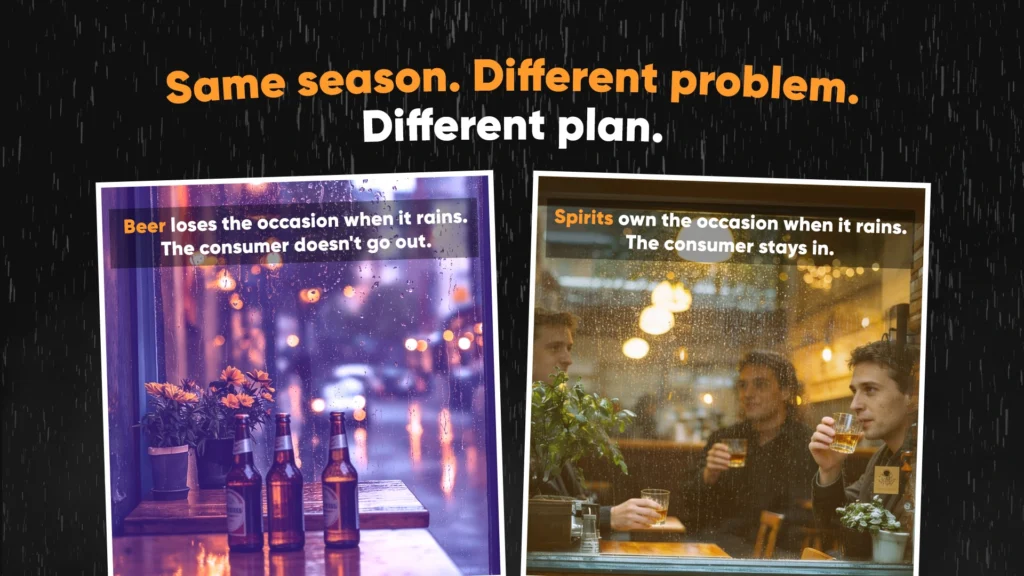
Beer’s problem is structural. The category is built on cold, refreshing, social, out-of-home occasions. When it rains, those occasions collapse. Footfall in bars drops. Retail impulse slows. Even home consumption of beer tends to fall because beer’s mental occasion, a cold drink on a hot day or a drink after stepping out, is directly disrupted by the weather. The 40% category drop UBL experienced in certain states is not a distribution problem or a pricing problem. It is an occasional problem.
Spirits behave differently. Whisky, rum, and brandy are naturally warm-drink categories with stronger at-home consumption patterns. The occasion framework for spirits, a drink at home after a long day, a small gathering, or a night in with friends, is actually more compatible with monsoon conditions than it is at odds with them. IWSR’s March 2026 India market analysis noted that spirits and RTDs continued to see growth in early 2025 even as beer faced headwinds, with India recording the highest total beverage alcohol consumption growth among 20 major global markets. (Source: IWSR, How to Win in India’s Beverage Alcohol Market, March 2026)
Within spirits, the premium segment showed particular resilience during monsoon quarters. During the same Q2FY26 period where UBL’s overall volumes fell, their premium beer segment grew by 17%. Separately, the IWSR noted that premium-and-above price bands grew 8% in volume in H1 2025, compared to 7% for alcohol overall. The consumer who is willing to drink at home during the monsoon tends to be the consumer who is also willing to trade up. (Source: Beverage Daily, February 2026)
The practical implication: a beer brand and a whisky brand should not be running the same promotional playbook in June. The beer brand needs mechanics that create pull despite reduced occasions. The whisky brand needs mechanics that deepen the at-home occasion and drive repeat purchase. The channel strategy, the creative approach, and the reward mechanic all follow from that distinction.
3. The Consumer Behaviour Shift Brands Often Miss
There is a behavioural pattern in the monsoon that most alcobev brand plans do not adequately account for, and it is not about the rain itself.
When footfall drops and social occasions compress, the consumer does not stop drinking. They shift where and how they drink. The on-trade loses. The off-trade, particularly the retail liquor outlet and the home occasion, gains share. This channel shift happens quietly and consistently, and brands that are not prepared for it end up with their promotional and activation investments in the wrong place at the wrong time.
The AB InBev India team captured this well in their 2025 strategy review. The company’s push to expand their cooler network from 15,000 to 35,000 units in retail stores was explicitly designed to protect off-trade presence during periods when on-trade consumption softens. (Source: Exchange4Media, May 2025) The logic is direct: if the consumer is not going to the bar, make sure the product is as visible, accessible, and attractive as possible at the point where they are shopping.
There is also a premiumisation effect that tends to emerge in the monsoon. When the social occasion is compressed, the consumer who is drinking is often doing so more deliberately. They are choosing a drink to enjoy at home, not a round of beers because they happen to be at a bar. This deliberate, considered purchase moment is an opening for brands to create pull through value-added promotions rather than blanket discounting.
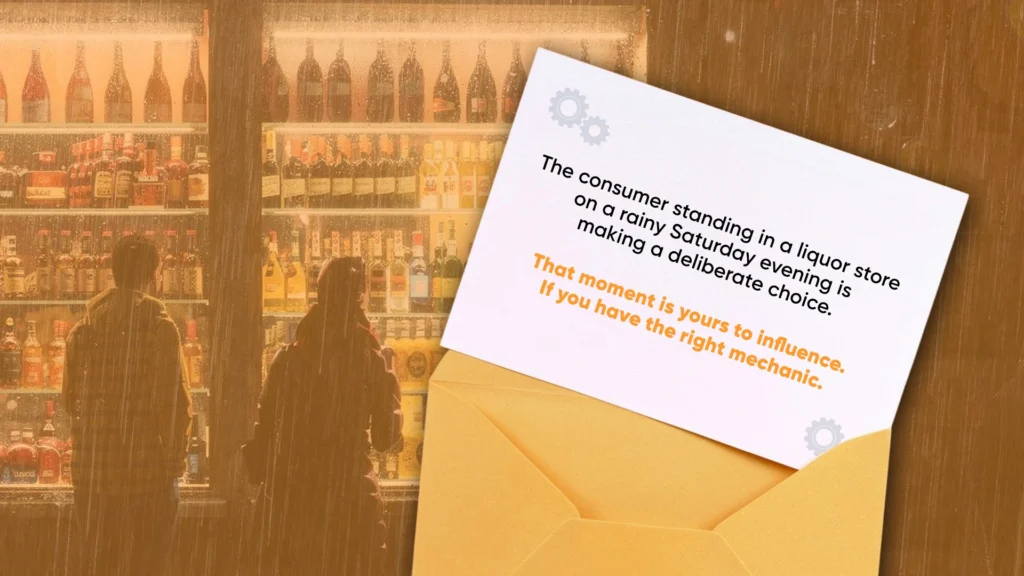
Think about it this way. A consumer standing in a liquor store on a rainy Saturday evening, buying for a quiet night at home, is in a different mindset than a consumer buying beer impulsively at a restaurant on a summer afternoon. The first consumer can be influenced by an on-pack offer, an assured reward, or a well-structured cashback mechanic. The second consumer was going to buy anyway. The monsoon, counterintuitively, creates a window where promotional mechanics have more influence over the purchase decision if they are designed well.
Research by Social Samosa and the broader industry data from 2025 consistently pointed to the same insight: consumers are not just reducing consumption during this period; they are changing the consumption occasion. Brands that show up for the new occasion – the home, the small gathering, the deliberate purchase – tend to protect their volumes better than brands that simply wait for the rain to stop. (Source: Social Samosa, December 2025)
4. Promotion Mechanics That Work in This Window
The question most brand managers and trade marketing heads are actually asking is not philosophical. It is practical: which promotion mechanics generate consumer pull when natural footfall is down?
Based on what the industry data and campaign performance evidence shows, four mechanics are particularly well-suited to the monsoon window.
On-Pack Assured Rewards
On-pack promotions are one of the most effective ways to create pull at the point of purchase during a lean season, because the reward is visible at the moment of decision. When a consumer picks up a bottle of whisky or a pack of beer, an assured reward – a cashback, a digital voucher, a complimentary experience – reduces the friction of the purchase and creates a reason to choose your brand over the one next to it.
The key word here is “assured”. Research found that campaigns featuring assured prizes alongside grand draw mechanics see redemption rates of up to 50%, significantly higher than typical cashback-only offers. The psychology is simple: a guaranteed reward feels safer than a lottery, and in a season where the consumer is already making a more deliberate purchase decision, certainty in the reward compounds the motivation.
For alcobev brands specifically, the on-pack mechanic works best when the reward is relevant to the monsoon occasion. A cashback that lands in the consumer’s UPI account within 48 hours. A streaming voucher for a night in. A food delivery discount to accompany the drink at home. These are rewards that meet the consumer where they actually are during the monsoon, rather than promising them something that feels aspirationally out of place.
Instant Cashback via UPI
The growth of UPI as a disbursement mechanism has fundamentally changed what is possible in consumer promotions. Brands can now offer cashback that is verified and credited to the consumer’s account within hours of purchase, eliminating the claim lag that historically killed consumer trust in cashback programs.
Research on cashback promotions notes that the mechanics work best when they are adapted to seasonal pushes, and that the biggest failure mode is a long or confusing claim process. For monsoon campaigns, where the consumer’s willingness to engage with a complex process is low, a frictionless UPI cashback mechanic is significantly more effective than a mail-in rebate or a web-form claim. Platforms that enable real-time reward visibility and instant digital disbursement are not an operational detail. They are what determines whether the campaign actually produces the pull it is designed to create. Buyerr’s cashback and digital coupon solutions are built precisely for this kind of frictionless, fast-pay mechanic.
Bundle Mechanics for Off-Trade
During monsoon season, the basket size at the retail liquor outlet tends to be higher than on summer impulse occasions, because the consumer is buying for an evening at home rather than a single drink out. Bundle mechanics like ‘buy two bottles, get a mixer’ or ‘buy a case, get a guaranteed gift’ are particularly well-suited to this purchasing behaviour because they align with what the consumer is already inclined to do.
The Opensend research on seasonal alcohol promotions notes that bundle offers, especially those framed around occasions (“winter warmer” and “monsoon night in”), create a sense of contextual relevance that flat discounts do not. (Source: Opensend, Promotion Ideas for Wine, Beer and Spirits Brands, May 2025) For alcobev brands, this means framing the bundle around the occasion rather than the discount: “Your monsoon evening, sorted” is a stronger campaign idea than “Buy two, save 10%.”
Experiential Rewards for At-Home Occasions
The 2025 alcobev marketing landscape showed a clear pivot from reach-led digital campaigns to engagement-led experiential activations. Brown Forman India’s Marketing Director, Vinay Joshi, described this shift as the “single biggest change” in their marketing plans for the year, moving budget from high-frequency digital impressions towards deeper 3rd-space experiences that build affinity and recruit consumers into brand stories. (Source: Social Samosa, December 2025)
During monsoon, large-scale outdoor activations are not viable. But the experiential instinct can be adapted to the season. Virtual cocktail masterclasses, cocktail recipe kits paired with product purchases, curated playlists or streaming content linked to on-pack QR codes. These are low-cost, high-engagement experiential reward mechanics that extend the brand into the at-home occasion. They also generate first-party consumer data (email, phone, preference) that benefits the brand beyond the quarter.
5. On-Trade vs. Off-Trade: Where to Put Your Monsoon Budget
This is, in many ways, the central strategic question of monsoon planning for alcobev brands and the honest answer is that most brands tilt their budgets in the wrong direction.
The instinct, particularly for beer brands, is to protect on-trade relationships during the monsoon. Keep the bar staff happy, maintain visibility at key outlets, and defend space on the back bar. This is not wrong. On-trade relationships are long-term assets. But doubling down on on-trade activation spend during a period when on-trade footfall is structurally depressed is a poor return on investment.
The smarter monsoon allocation tends to look like this:
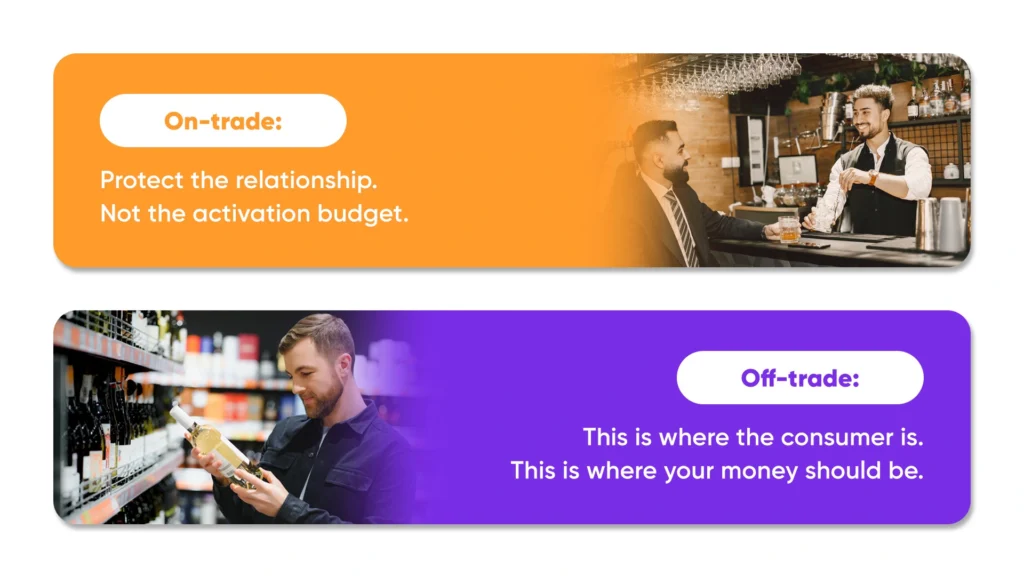
On-trade: Relationship protection, not volume activation. Maintain visibility, keep the relationship intact, ensure your product is stocked and visible for the consumers who do step out. But don’t pour your activation budget into an environment where the consumer isn’t showing up. Barstaff training, product education sessions, and cocktail menu development are high-value on-trade investments during monsoon precisely because they do not depend on footfall to pay back.
Off-trade: Volume activation and consumer pull. This is where your promotion budget should be concentrated during June to September. On-pack mechanics, cashback programs, bundle offers, and retail visibility at the point of purchase are all off-trade tools that work against the monsoon headwind because they meet the consumer in the channel where they are actually shopping.
AB InBev’s decision to expand their in-store cooler network to 35,000 units, prioritising off-trade retail presence, is a concrete example of this logic applied at scale. (Source: Exchange4Media, May 2025) The cooler is both a visibility tool and a pull mechanism: a well-placed, well-stocked cooler in a retail outlet is the alcobev equivalent of premium shelf positioning, and during monsoon it carries even more weight because the consumer’s purchase decision is more deliberate.
For spirits brands, the off-trade allocation makes even more commercial sense. Spirits’ at-home occasion is naturally stronger during monsoon, and a well-designed off-trade promotion captures that natural behaviour rather than fighting against it.
6. What Brands Often Get Wrong in Monsoon Planning
Most monsoon planning failures are not about budget. They are about timing, design, and assumptions. A few patterns worth noting:
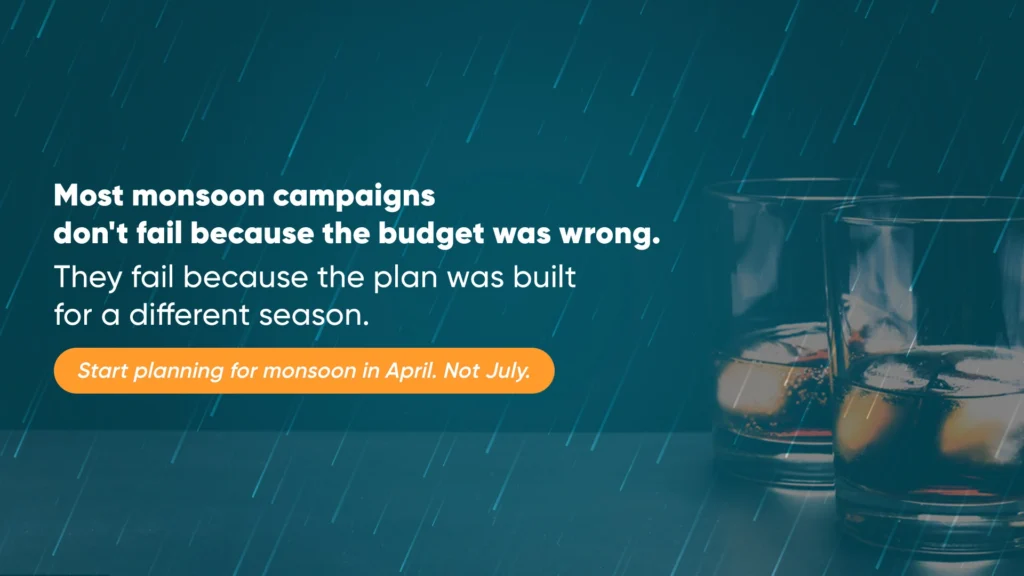
Starting too late. Monsoon promotional campaigns that launch in July are already behind. Consumer purchasing habits for the July-September window are being shaped in May and June. Distributor stocking decisions for the quarter are made in April and May. A brand that activates its monsoon promotion in week three of July is fighting a battle where the early positions have already been taken by whoever planned ahead.
Running summer mechanics into a monsoon window. A campaign designed to drive impulse purchase at the point of chilled-beverage display works in May. It does not work in August when the consumer is not making impulse purchases at restaurant coolers. The occasion has changed. The mechanic needs to change with it.
Treating all geographies the same. Monsoon does not arrive uniformly across India. Kerala gets heavy rain from June. Maharashtra’s monsoon typically peaks in July. Parts of North India get delayed or compressed monsoons. A brand running a uniform national promotion from June to September is over-investing in markets that don’t need the push yet and under-investing in markets where the weather impact is already being felt. State-level activation planning, even at a broad level, delivers meaningfully better returns than a single national campaign calendar.
No first-party data capture. The monsoon promotion window on-pack QR codes, cashback claim flows, and digital voucher redemptions are some of the highest-quality data collection opportunities available to alcobev brands. A consumer who scans a QR code on a bottle of whisky, claims a cashback, and redeems a voucher has told you exactly who they are, what they buy, and when they buy it. Brands that do not build data capture into their monsoon promotion mechanics are spending money without learning anything. First-party data and consumer insights platforms built into the claim flow are what make this possible at scale.
Discounting instead of rewarding. There is a significant difference between a price reduction and a promotion. A discount trains the consumer to wait for the next discount. An assured reward – a cashback, a digital gift, an experience – creates a positive brand interaction without permanently lowering the consumer’s price anchor. During monsoon, when margin pressure is already coming from volume decline, protecting price while offering value through rewards is both commercially and brand-strategically sounder than running a blanket discount.
7. The Monsoon Marketing Playbook: Quick Decision Framework
| Situation | Recommended Mechanic | Channel Focus | Watch Out For |
| Beer brand, high-rain market, volume declining | On-pack assured reward + bundle offer | Off-trade retail | Mechanic that depends on out-of-home occasion |
| Spirits brand, at-home occasion growing | UPI cashback + experiential at-home reward | Off-trade + digital | Generic reward not tied to the occasion |
| Premium spirits, premiumisation play | Experiential reward (cocktail kit, masterclass) | On-trade + D2C | Over-indexing on reach vs depth of engagement |
| Beer brand, on-trade relationship protection | Barstaff training + menu integration | On-trade | Spending activation budget where footfall isn’t |
| Multi-state brand, geography variation | State-phased campaign with tiered launch | Market-specific | Single national calendar misaligned with rain patterns |
| D2C alcobev brand, monsoon acquisition | Instant cashback + referral mechanic | Digital + off-trade | Long claim processes that kill redemption |
| All brands: data capture | QR-linked promotion with UPI claim flow | All channels | No data strategy attached to promotion spend |
The fast decision rule:
- If footfall is down → shift spend from on-trade activation to off-trade pull mechanics
- If the consumer is buying more deliberately → use assured rewards, not discounts
- If the occasion has moved indoors → make the reward relevant to the indoor occasion
- If you are a spirits brand → the monsoon is not the problem it is for beer; plan for at-home growth
- If you are a beer brand → protect off-trade, invest in on-pack, plan for premium
In Closing
The monsoon is a fixed variable. It will come. Volumes will soften in some markets. Footfall will dip. The on-trade will slow down. None of this is news.
What is actually within a brand’s control is how it chooses to show up during that window. Whether it plans an activation calendar built for the real consumer behaviour of the season, or defaults to the summer playbook with slightly reduced expectations. Whether it invests in promotion mechanics that create pull when natural pull is absent, or waits for the weather to improve. Whether it captures the data and the consumer relationship that the monsoon window makes available, or lets the quarter pass without learning anything from it.
The brands that tend to come out of monsoon in the strongest position for the festive season are not the ones that lost the least. They are the ones that used the lean quarter to build something: consumer relationships, data, retail presence, trade partnerships – that compounds when the volume returns. That is a choice about planning, not about rainfall.
If you found this useful, these related reads may also be worth your time:
- How to Plan a High-Impact Consumer Promotion Campaign in India
- Festival Promotion Ideas and Timing Guide
- How Promotion ROI Analytics Helps Boost Your Campaign Performance
- Experiential Rewards: Strategies to Create High-Impact Customer Experiences
- Trade Promotion Strategies That Move Inventory
Interested in building consumer promotion mechanics that work through lean seasons? Explore how Buyerr helps alcobev and FMCG brands run promotions that drive pull even when footfall drops. Or get in touch directly to discuss your monsoon activation plan.
You can also write to us at [email protected] or follow our updates on LinkedIn.