
Godfrey Phillips India Limited
In categories with high purchase frequency, the real challenge is retention. Godfrey Phillips needed a way to keep consumers coming back, not just once, but consistently.
A milestone-led reward system offered a simple approach: reward early, then build aspiration over time.
Read more to see how tiered rewards helped drive repeat purchases and improve consumer retention.

How Godfrey Phillips Used a Milestone-Based Consumer Reward Program to Drive Repeat Purchases and Improve Retention
Getting a consumer to buy once is a marketing problem most brands know how to solve. Getting them to come back, again and again, without a discount pulling them each time, is a different challenge entirely.
In high-frequency purchase categories, that second problem is the one that actually decides who wins. Read More
The Problem With One-Time Incentives
When purchase cycles are short and choices are plenty, consumers switch easily. A trial offer or a one-time reward can move someone to buy, but it rarely gives them a reason to stay. Once the incentive is claimed, the relationship resets. The next purchase is up for grabs all over again, and a competitor’s promotion can pull the same consumer away just as quickly.
This is the trap most reward programs fall into. They are built to spike a single transaction rather than to sustain a sequence of them. The result is a campaign that generates activity while it runs and leaves little behind once it stops. Building loyalty that lasts takes a different design entirely. Also Read: Loyalty Program for Retail Brands: 10 Best Practices That Drive Results.
Godfrey Phillips was working against exactly this dynamic. The category was active, purchase frequency was high, but consumer retention was difficult to hold. What the brand needed was not a bigger one-time reward. It needed a structure that made staying more rewarding than switching.
Rewarding the First Purchase and the Tenth
Instead of a flat incentive, Godfrey Phillips built its program around a milestone-based reward ladder. The logic was deliberate. Reward early to remove hesitation, then build aspiration over time so that each purchase carries the consumer closer to something they actually want.
At entry, consumers received assured cashback, creating immediate value and lowering the barrier to participation. Pairing that entry-level cashback and digital coupon value with a clear path forward is what changed the dynamic. From there, the structure changed character. As consumers continued buying, they unlocked higher milestones tied to aspirational rewards like smartwatches, speakers, and earbuds. Each level created a clear next goal, so the consumer always had a visible reason to make the next purchase rather than treat the last one as the end of the relationship.
Exactly how the tiers were structured, what sat at each milestone, and how progress was tracked are detailed in the full case study. What the design made clear is a principle worth noting on its own: when a consumer can see a reward building ahead of them, the decision to repurchase stops being a fresh choice each time and starts feeling like progress they do not want to abandon.
Why a Reward Ladder Sustains Behaviour
The deeper insight here is about how reward structure shapes loyalty.
A single reward closes a loop. The consumer acts, receives, and the cycle ends. A reward ladder does the opposite. It keeps the loop open. Each milestone reached reveals the next, which means the most engaged moment for the consumer is not when they claim a reward but when they realise how close they are to the one ahead. The aspirational tier is what keeps that pull alive. Also Read: 2026 Trends in Retail Promotions and Experiential Rewards in India.
That shift matters because it converts short-term incentives into long-term retention. The brand stops paying repeatedly to re-acquire the same consumer and instead builds a structure where the consumer has a standing reason to return. Routine repeat buying becomes goal-oriented behaviour, and goal-oriented behaviour is far harder for a competitor to interrupt. This is exactly what well-built consumer loyalty and layered experiential rewards are designed to achieve.
For brand and marketing teams in high-frequency categories where churn is constant and discounts are the default lever, this case study raises a question worth examining: is your reward program designed to win a single purchase, or to make the next ten feel worth pursuing?
If you want a program that rewards the tenth purchase as deliberately as the first, get in touch with Buyerr, and follow Buyerr on LinkedIn for more on loyalty and retention.
Download the full case study to see how Godfrey Phillips structured its milestone-based reward program, how it balanced instant cashback with aspirational incentives, and what the numbers showed once short-term rewards were turned into long-term retention.
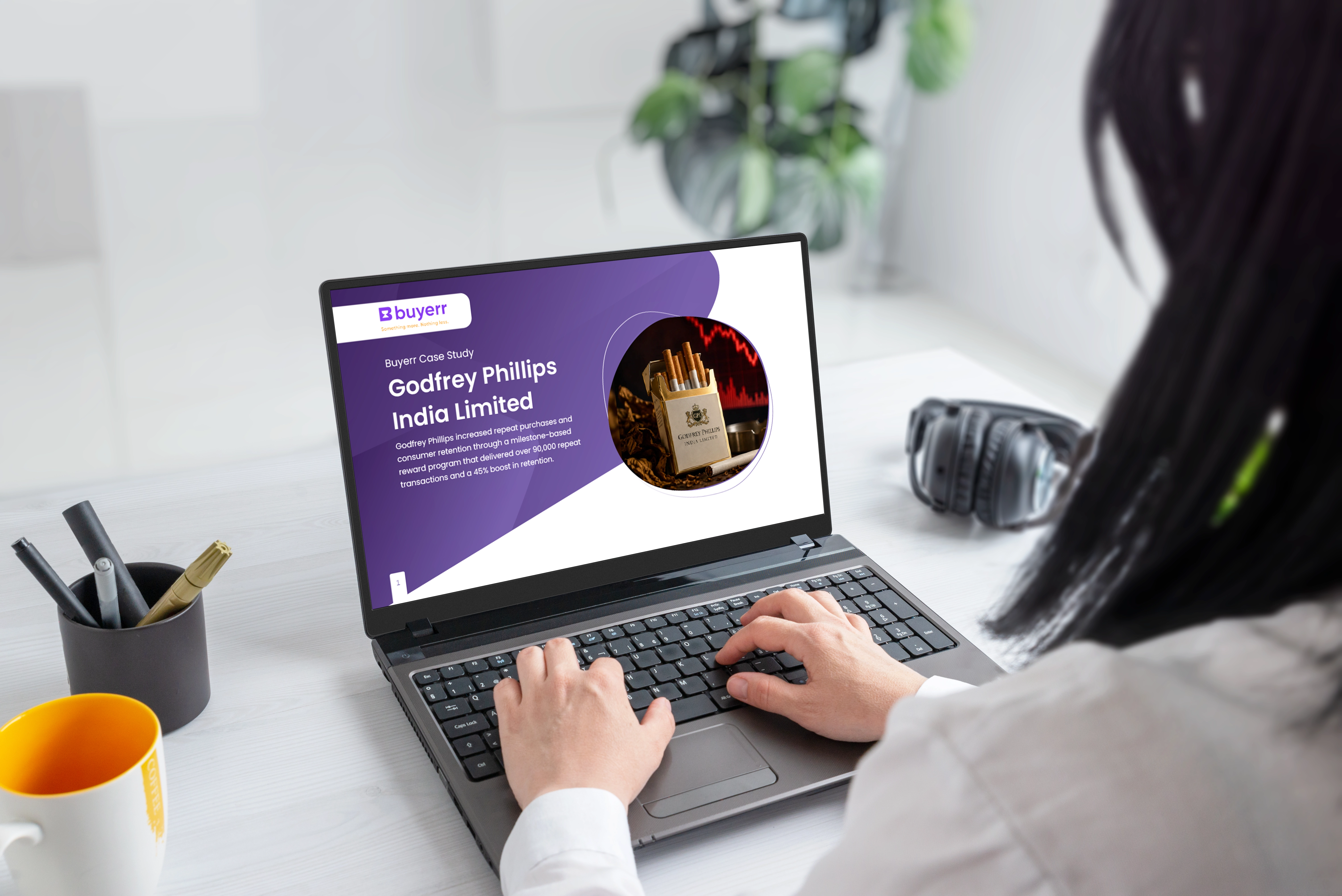
Download the full case study to explore how Godfrey Phillips used cashback and milestone rewards to drive 90K+ repeat purchases and improve retention by 45%.

