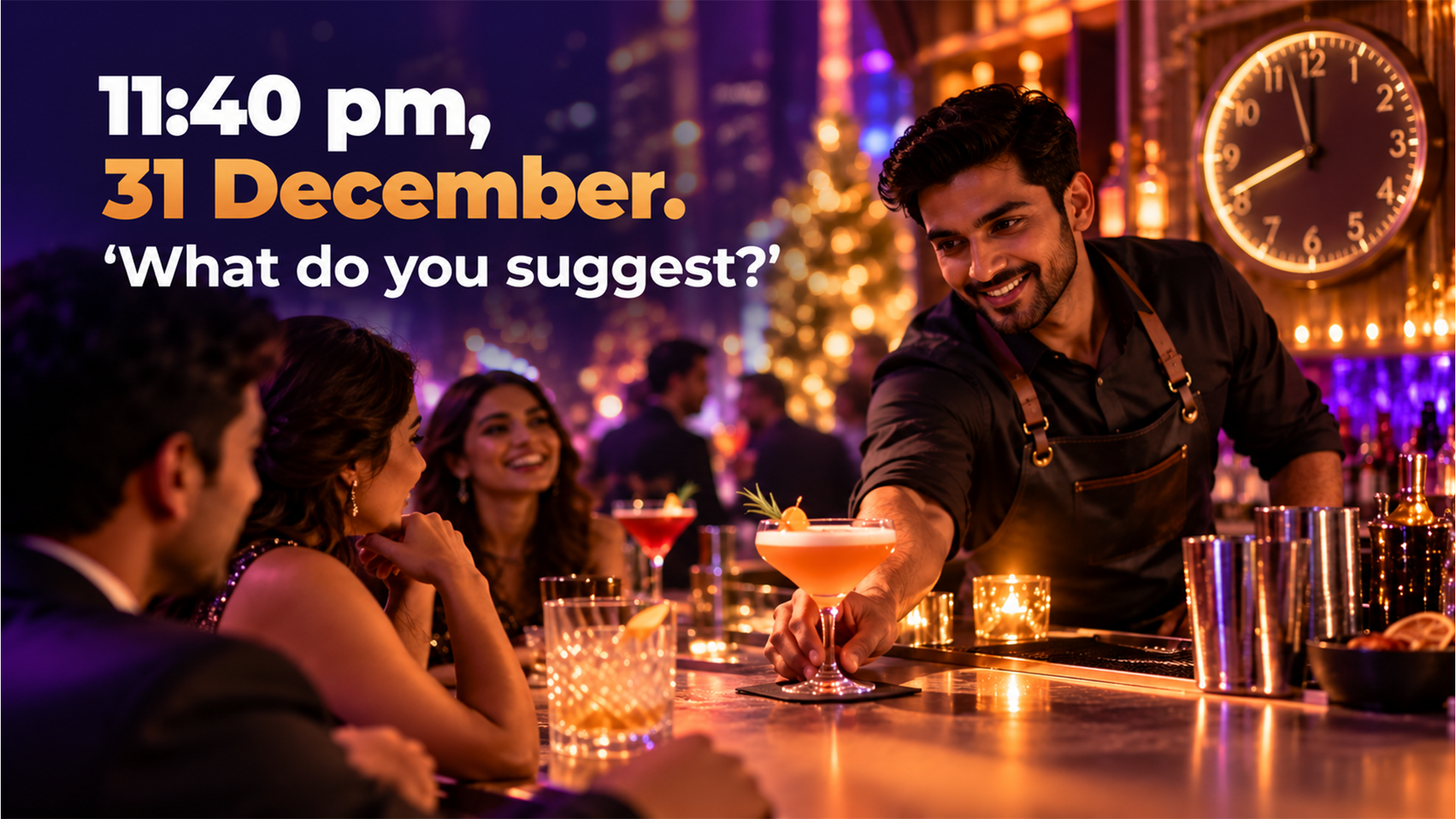
A bartender loyalty program in India proves its worth at about 11:40 pm on 31 December. The bar is full. The countdown is twenty minutes away. A table of six catches the bartender’s eye and asks the most valuable question in alcobev: “What do you suggest?”
No advertisement reaches that moment. No billboard is allowed to. The bartender’s answer is the brand’s best media on the biggest night of the year.
This blog is a 31-day countdown to that answer. At every stage, it shows what happens at the bar, at the retail outlet, and at the brand.
Before we get into this, here are a few relevant resources from Buyerr: Channel Loyalty Programs, Trade Promotions, and Experiential Rewards. You can also explore Gamified Promotions and Contests and Thematic and Seasonal Campaigns.
1. Why the Last Week of December Is Alcobev’s Biggest Window
The numbers from last December speak for themselves.
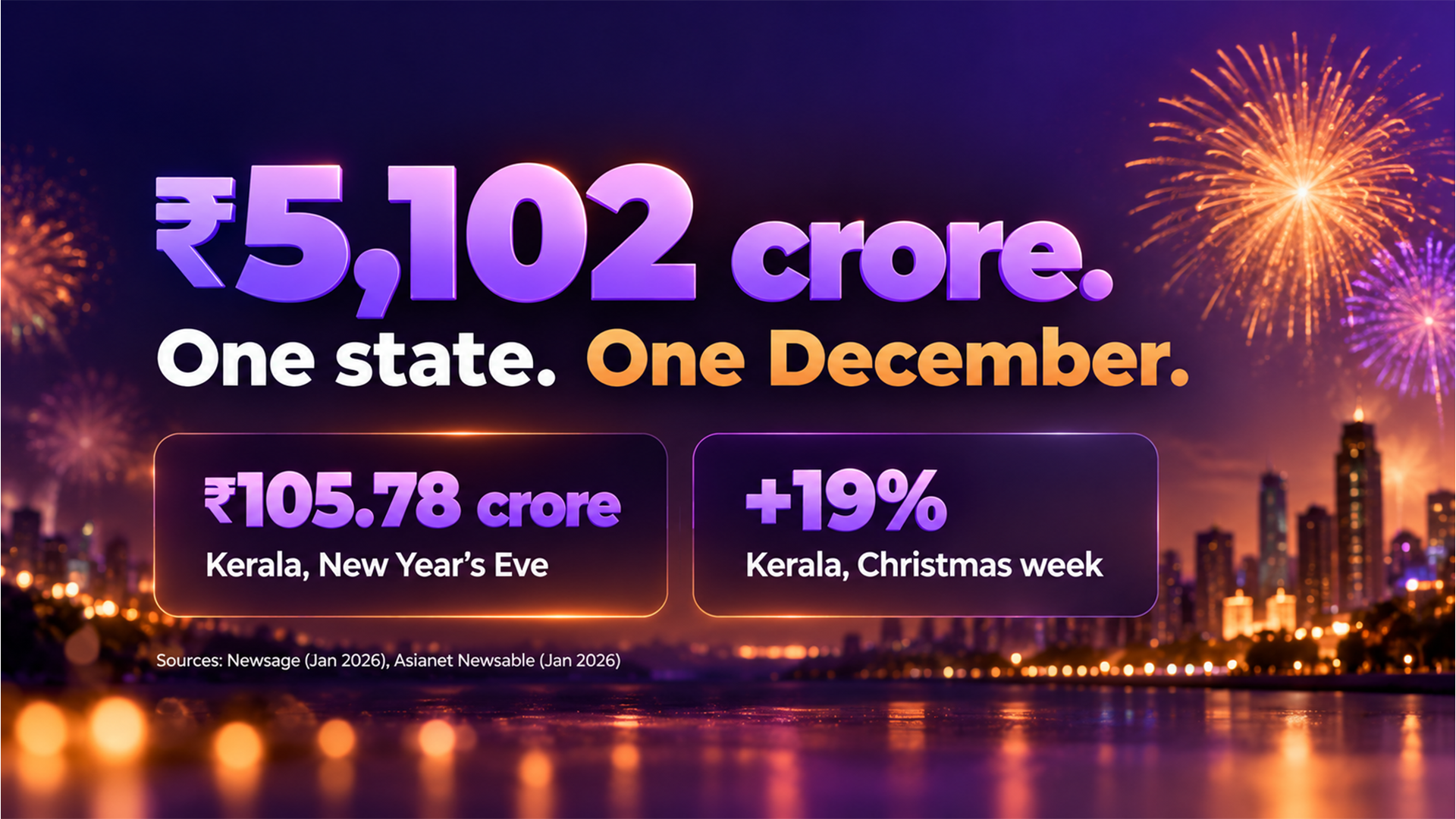
- Telangana: ₹5,102 crore in December 2025, the first month ever above ₹5,000 crore. Over ₹350 crore on 31 December alone (Source: Newsage, January 2026).
- Kerala: ₹105.78 crore on New Year’s Eve, an all-time record for Bevco. Christmas week sales were up 19% at ₹332.62 crore (Source: Asianet Newsable, January 2026).
- Karnataka: ₹308 crore on 31 December 2024, against a target of ₹250 crore, with 7,305 vendors restocking that one day (Source: The Hans India).
In Telangana, normal days run at ₹100 to 150 crore. The last days of December roughly double that (Source: Telangana Tribune). And the value is shifting upwards. ICRA expects industry volumes to grow just 1 to 3% in FY2027, while revenues grow 10 to 12%, driven by premiumisation, with “a value shift underway in favour of the premium and prestige spirits” (Source: ICRA, Alcobev Annual Update, September 2026).
Flat volume plus rising value means one thing: the choice of brand at the bar and the counter matters more every year.
Also Read: Alcohol Marketing India Diwali 2026: 6 Legal Strategies
2. What Bartenders Actually Want From Brands
Before planning the countdown, it helps to know what moves the person you are building it for. The NIQ / BarSights Global Bartender Report 2025 surveyed hospitality professionals across 10 countries, including India. The key findings:
- The average premium bartender influences 8,360 drink decisions a year.
- 92% are likely to recommend a brand they feel positive about.
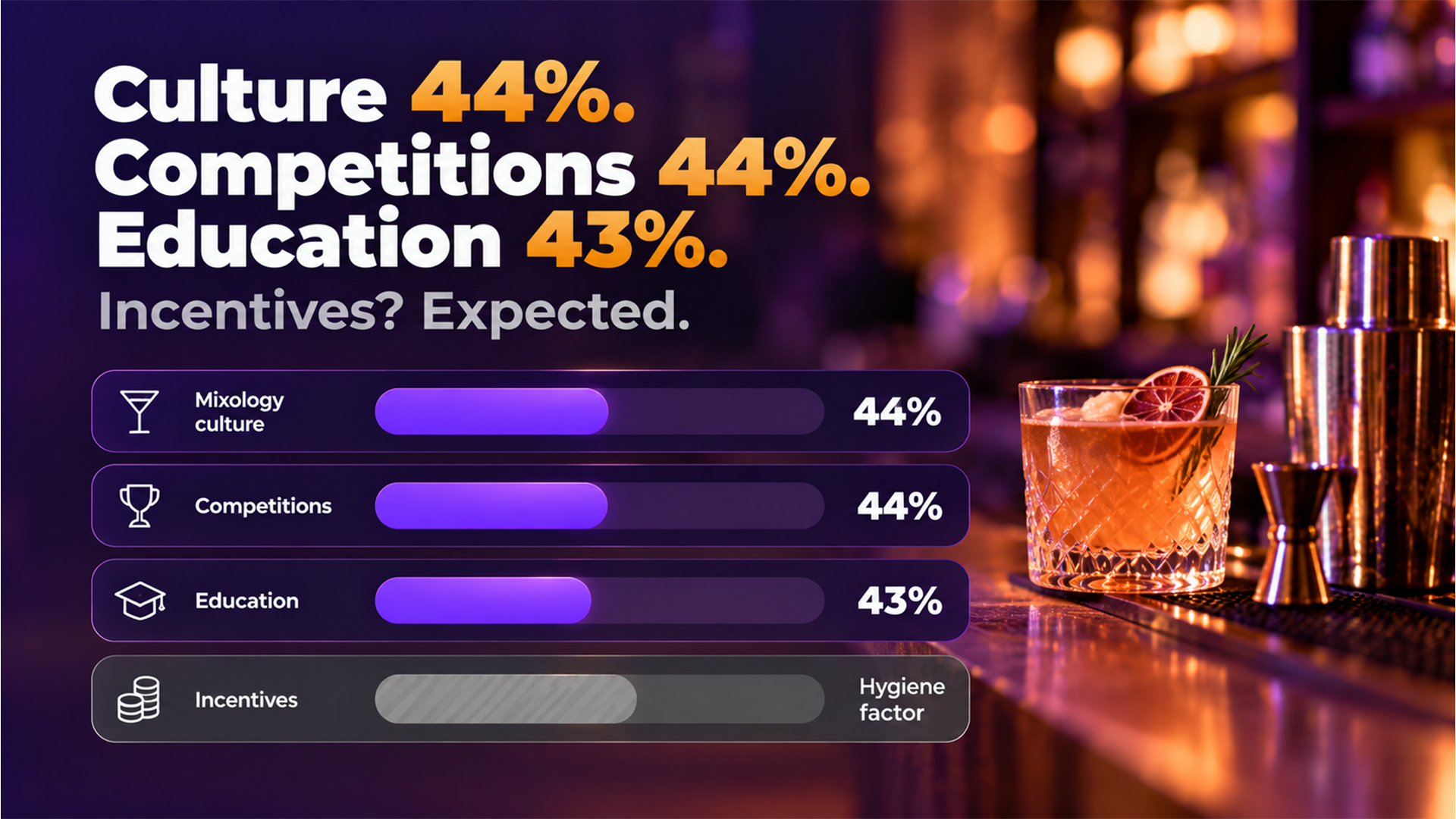
- Indian bartenders most want alignment with mixology culture (44%), competitions that showcase their skills (44%) and education (43%), preferably short and hands-on.
- Incentives and reliable supply are “hygiene factors.” They are expected, but they do not win loyalty on their own.
(Source: NIQ, India’s Bartenders: How Spirits Brands Can Win in a Cocktail-First Market, December 2025)
That is the most useful insight in this blog. A bartender loyalty program in India works best when it is built on craft, recognition and learning — not just payouts. That also happens to be the approach that sits most comfortably within India’s rules.
3. The Bartender Loyalty Program: A 31-Day December Countdown
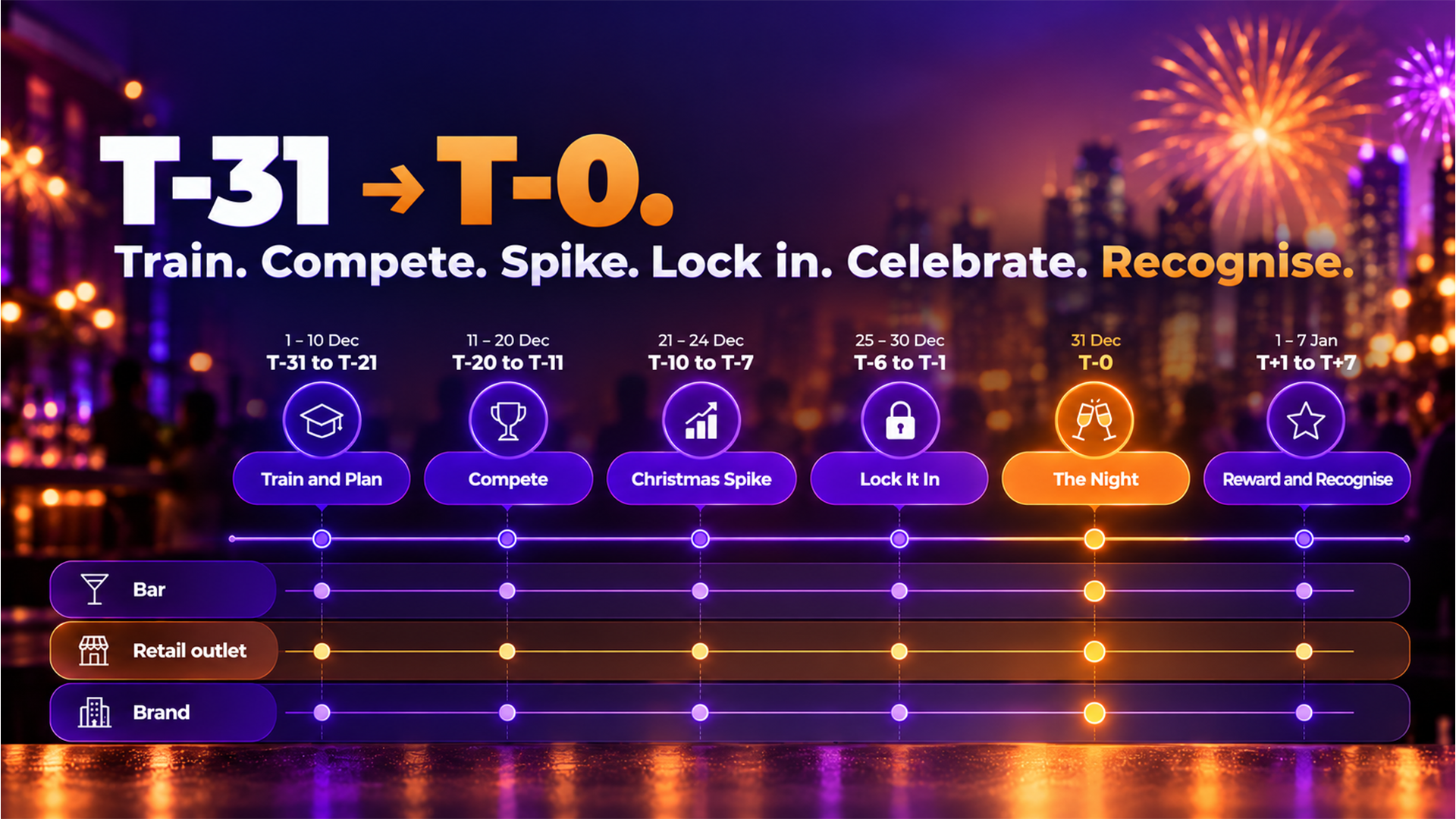
T-31 to T-21 (1 to 10 December): Train and Plan
At the bar: Bartenders join the program and get short training modules on their phone — three new serves for the season, each under ten minutes. Bartenders work 55 to 65 hour weeks, so anything longer will not get watched (Source: NIQ).
At the retail outlet: Outlets confirm festive stock levels for Christmas week and the New Year weekend. This is the decision that matters most. An outlet that runs out on 30 December cannot be fixed on 31 December.
At the brand: Launch the program with clear rules, publish the competition calendar, and set up city-level leaderboards. Brief the field team on which bars and outlets to visit first.
T-20 to T-11 (11 to 20 December): Compete
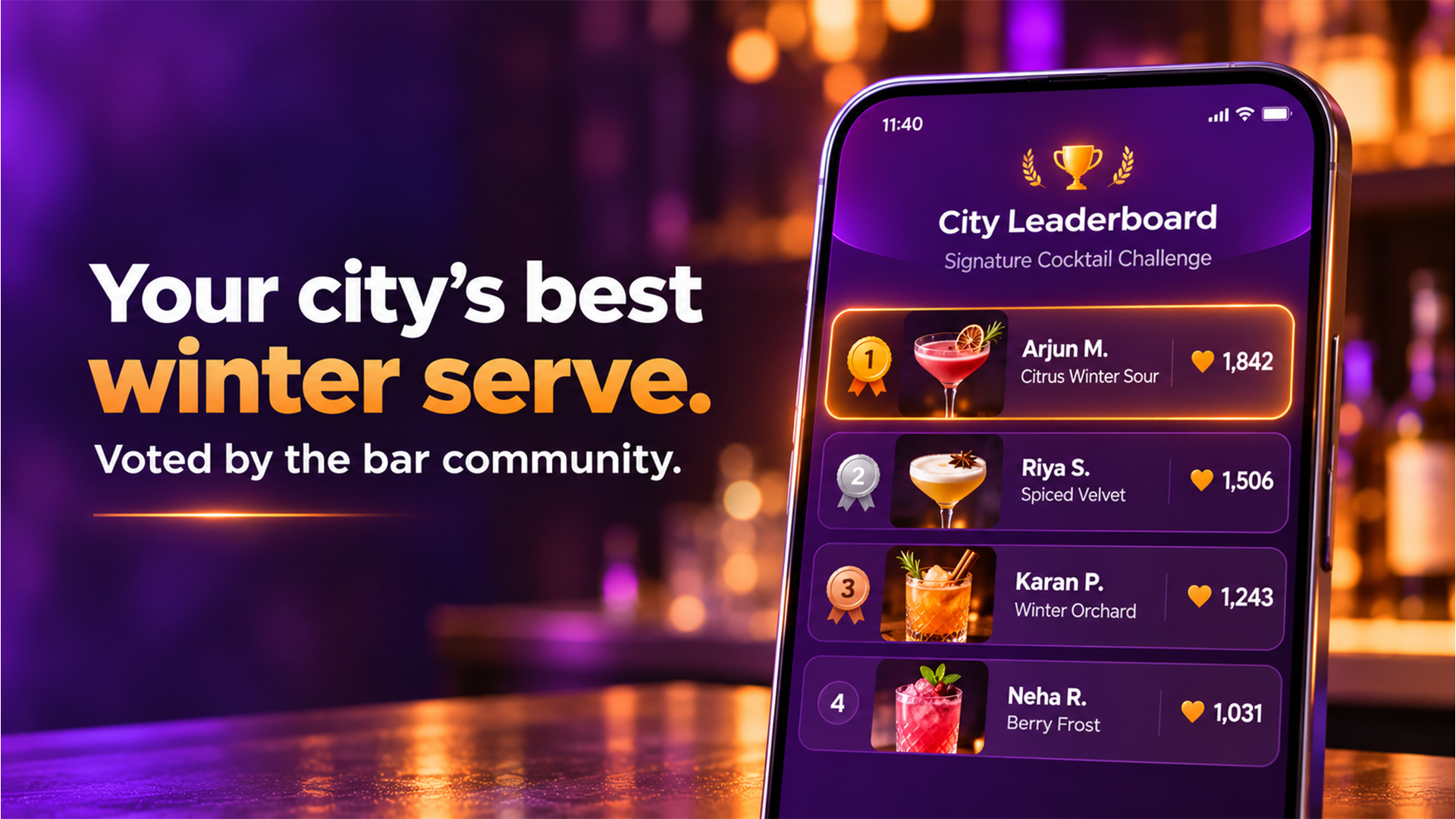
At the bar: A seasonal signature-cocktail competition by city. Bartenders submit their serve with a photo and recipe. Peers and a panel vote. Winners get recognition, not just rewards: a feature on the brand’s trade channels, a certificate, a masterclass seat.
At the retail outlet: A display and visibility challenge. Outlets upload a photo of their festive display. Approved displays earn points on a gamified leaderboard by town.
At the brand: Leaderboards go live. Share weekly updates so bartenders and outlets can see where they stand. Competition in the trade is driven by peers, not targets.
T-10 to T-7 (21 to 24 December): The Christmas Spike
At the bar: The season’s serves go onto menus. The bartenders leading the leaderboard get a mid-season shout-out.
At the retail outlet: Christmas week is a real spike — Kerala’s Christmas week sales grew 19% last year. Outlets get restock alerts based on their own sell-through, so the New Year weekend is covered.
At the brand: Watch the data. Which cities, bars and outlets are active? Where are scans and submissions low? Send the field team there, not to the outlets already doing well.
Also Read: Monsoon Marketing Strategy for Alcobev Brands
T-6 to T-1 (25 to 30 December): Lock It In
At the bar: Menu placements are confirmed for the night. Bar teams get a one-page “New Year’s Eve serve guide” with the season’s cocktails and a few responsible-serve options, including low-alcohol and zero-alcohol serves.
At the retail outlet: The final restock before the weekend. Outlets that hit their display and stock goals unlock their next tier.
At the brand: Flag likely stock-outs early. Confirm that rewards and recognition are ready to go out in the first week of January, on time.
T-0 (31 December): The Night
At the bar: The bartender does what they do best. A month of training, competition and recognition shapes the answer to “What do you suggest?”
At the retail outlet: The busiest counter day of the year. The work was done in the 30 days before.
At the brand: Nothing new to launch. The best New Year’s Eve plans are finished before the night begins.
T+1 to T+7 (1 to 7 January): Reward and Recognise
At the bar: Competition winners are announced. Top bartenders receive experiential rewards — masterclasses, certification courses or a trip to a distillery, where permitted.
At the retail outlet: Points earned in December are credited and visible. Outlets see their festive summary and their tier for 2027.
At the brand: Review the data: which serves were most submitted, which cities were most active, which outlets ran short. This is the start of next December’s plan.
Also Read: Festive Trade Loyalty Program India: 7 Proven Strategies
4. Staying Within the Rules
India’s alcohol rules are strict, and they vary by state. A few principles keep a bartender loyalty program on the right side of them.
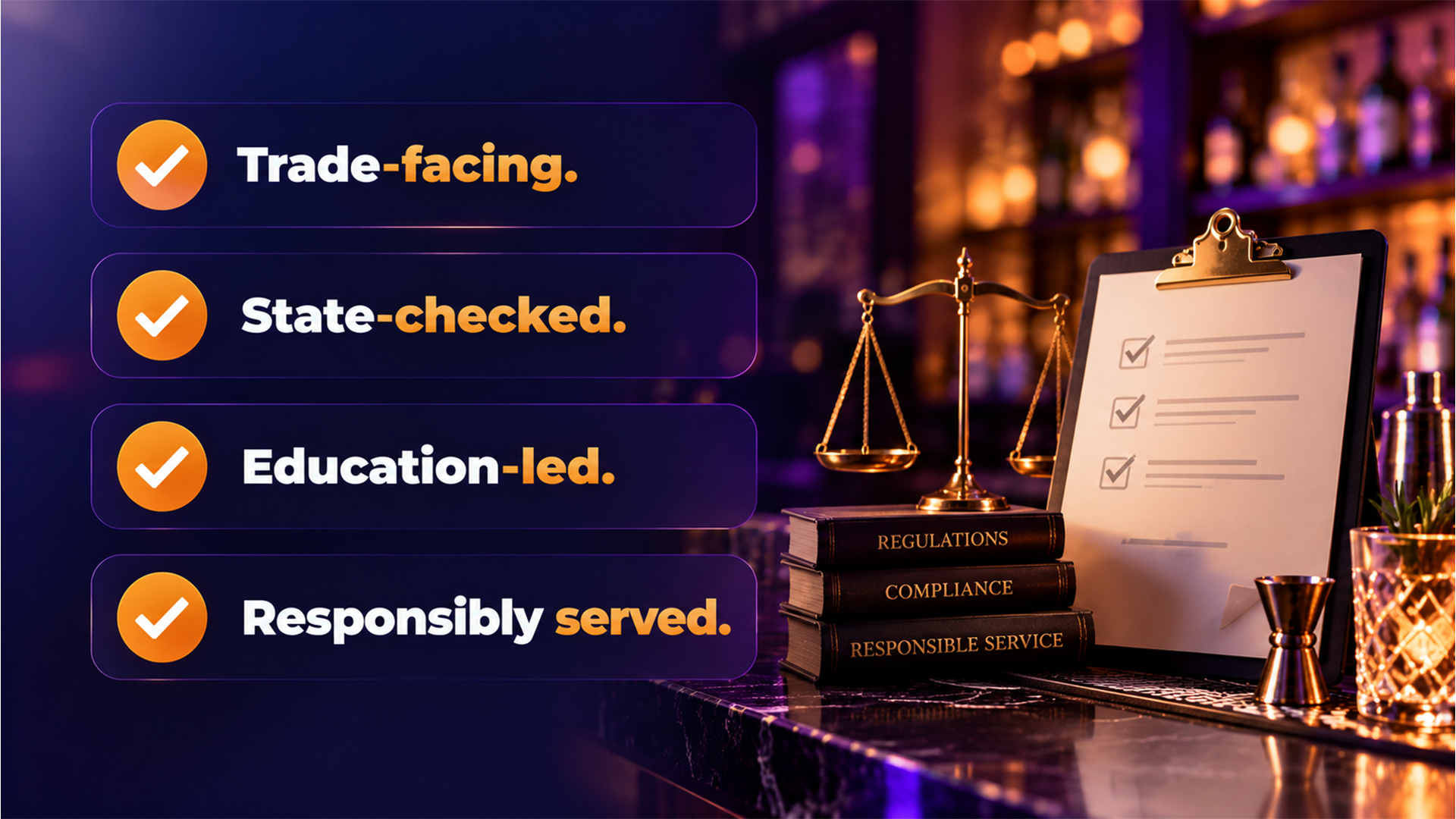
- No consumer advertising. The Cable TV Rules prohibit alcohol ads, and the CCPA’s 2022 guidelines and ASCI’s code prohibit surrogate advertising (Source: Cyril Amarchand Mangaldas, June 2025). Keep the program trade-facing.
- Alcohol is a state subject. Each state’s Excise Act sets its own rules on promotion, point of sale and trade incentives. Check every state before launch.
- Know who runs retail. In some states, liquor retail is run by government corporations, so a retailer program may not apply there. Focus on bars and on states with private retail licences.
- Lead with education and recognition. Training, certification, competitions and recognition are what bartenders value most, and they are the most defensible way to engage the trade.
- Promote responsible serving. Include low-alcohol and zero-alcohol serves in your seasonal campaign, and never reward volume pushed on a single guest.
For more on staying compliant during festive seasons, read our guide to legal alcohol marketing strategies in India. This is general guidance, not legal advice. Have your legal and compliance team review any trade program state by state.
5. Your Countdown Checklist
- ☐ Training modules are ready, each under ten minutes
- ☐ The cocktail competition rules and calendar are published by 10 December
- ☐ City leaderboards are live for bars and outlets
- ☐ Retail outlets have confirmed festive stock levels
- ☐ Restock alerts are set up for Christmas week
- ☐ A New Year’s Eve serve guide with responsible serves is with every bar team
- ☐ Rewards and recognition are ready to go out by 7 January
- ☐ Every state in the program has been checked against its excise rules
Also Read: Experiential Rewards: Strategies to Create High-Impact Customer Experiences
6. In Closing
On 31 December, a brand cannot buy the moment that matters. It can only prepare for it.
The bartender who was trained, challenged and recognised in December is the one who answers “What do you suggest?” with confidence. The outlet that stocked up on time is the one that does not run dry. Neither happens on the night. Both happen in the 30 days before.
Start the countdown on 1 December, and the night takes care of itself. Planning your December trade promotions? Explore Buyerr’s channel loyalty programs or talk to us about a bartender and retailer program built for your states. For more on alcobev trade marketing, follow Buyerr on LinkedIn.