
The most common festive trade loyalty program India brands run is not a loyalty program at all. It is an elaborate pre-stocking scheme dressed up as one. In August, the planning deck goes around. The scheme is approved. Targets are set, usually 20–30% above last year’s festive period. The distributor is briefed in September. Retailers are enrolled. The mechanic launches in October with Navratri. By Diwali, the primary sales numbers look strong. The scheme is declared a success.
Then December arrives. Secondary sales data comes in. And the brand discovers that the retailer bought a lot of product and sold a fraction of it. The rest is sitting in the channel, which means January and February are going to be soft because the trade is destocking, not reordering. This is the design failure that most festive trade loyalty program India planning decks never address.
The brands that avoid this understand one thing that most planning decks do not acknowledge: the festive season is 87 days, not one day. It runs from Onam through Navratri and Durga Puja to Dhanteras, Diwali, and Bhai Dooj. A festive trade loyalty program India brands design for the full window, with mechanics that drive real sell-through rather than just channel loading, produces results that look meaningfully different in the December secondary sales data.
Before we get into this, here are a few relevant resources from Buyerr:
- Trade Promotions — Incentive design for festive channel programs
- Channel Partner Program — Structured retailer and distributor loyalty
- Loyalty Solutions — Channel loyalty architecture
- Cashback and Digital Coupons — Instant UPI reward disbursement
- Rewards and Incentives — Digital reward delivery at scale
- Consumer Promotions — Festive season end-to-end solutions
You can also explore: Trade Promotion Strategies That Move Inventory, Motivating Channel Partners: Incentives and Training, Loyalty Program Best Practices for Retail Brands, How to Calculate Break-Even and ROI for Promotions and Incentives, and Festival Promotion Ideas and Timing Guide.
What we’ll cover in this blog: Why the festive window is 87 days, not one day. The pre-stocking trap and how to design your way out of it. The regional festival calendar every trade marketing head needs. The three-phase festive trade activation that works. The design principles separating effective festive schemes from expensive ones. What data you need to see while the season is running. And the post-festive retention window that most brands walk away from empty-handed.
1. The 87-Day Reality Behind a Festive Trade Loyalty Program India
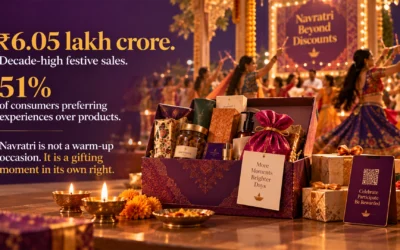
India’s festive season generated ₹6.05 lakh crore in total trade in 2025, up 25% year on year. The festive season is not a single event. It is a quarter-long series of distinct commercial moments, each with its own geography, its own consumer behaviour, and its own trade dynamics. Any festive trade loyalty program India brands build must be designed for this full complexity, not just the Diwali peak.

The RAI measures the festive window at 87 days, running from early August through the end of October, with organised retail growing 11% YoY in 2025 across this full period. But within that window, there are at least five distinct demand spikes, each requiring a different trade activation posture:
Onam (August–September): Kerala and parts of Tamil Nadu. High purchase intent across food, gifting, and consumer goods. Brands not running a state-specific scheme during Onam are leaving volume on the table in one of India’s highest-spend consumer markets.
Navratri (October 2–11, 2026): Gujarat, Maharashtra, Rajasthan, and parts of North India. The opening act of the peak festive window. Pre-Navratri D2C order volumes were already up 16% year on year by August in 2026. The trade that is loaded and activated before Navratri starts shapes the first sales signal of the season.
Durga Puja (October 2–6, 2026): West Bengal, Odisha, and north-eastern India. A completely different festive consumer, different product categories at peak demand, and different trade channel dynamics than the Navratri market. A brand running one national campaign for both simultaneously is under-activating in both.
Dhanteras and Diwali (November 6–8, 2026): The peak within the peak. 90 million shoppers participated in just the first 11 days of the Diwali 2025 sales window, spending approximately ₹7,000 each on average. This is the moment every festive trade loyalty program India scheme has been building toward.
Post-Diwali (November 9 onwards): A dual-peak phenomenon, with a second wave of high-ticket appliance purchases post-Diwali. Brands that maintained promotional activity through mid-November captured incremental revenue that single-peak planners missed.
The practical implication: a single national trade scheme running from October 1 to November 8 is present for only part of the festive window and geographically misaligned for most of it. The brands that plan a festive trade loyalty program India across the full 87 days, with distinct activation moments for distinct markets, consistently outperform those that plan for Diwali alone.
Also Read: Festival Promotion Ideas and Timing Guide
2. The Pre-Stocking Trap Every Festive Trade Loyalty Program India Must Avoid

Before designing any festive trade loyalty program India brands intend to run, it is worth being honest about the most common failure mode in festive trade schemes.
A retailer buys 30% more during the festive month to qualify for the scheme target. The brand records this as secondary sales uplift and attributes it to the scheme. But the retailer would have bought that volume anyway, just in the following month. The scheme did not create incremental demand. It pulled forward a purchase that was going to happen regardless. And the brand has now paid scheme rewards for volume it would have received for free.
There are two ways to design your way out of it.
First: link scheme rewards to sell-through, not purchase volume. A festive trade loyalty program India that rewards the retailer for secondary sales, products sold to consumers rather than products purchased from the distributor, measures the right behaviour. Brands that have built QR-based engagement mechanics into their schemes, where the consumer scan is the data point that confirms a sale, can track this with accuracy that distributor reports cannot match.
Second: design a post-festive monitoring window into the scheme from the start. A retailer whose post-festive purchase velocity drops sharply in November and December has almost certainly pre-stocked rather than sold through. Tracking this cohort across successive quarters, and adjusting scheme targets accordingly in the following year, progressively improves the quality of the festive trade loyalty program India over time.
Also Read: Trade Promotion Strategies That Move Inventory
3. The Regional Calendar Every Festive Trade Loyalty Program India Needs

India’s festive demand is not geographically uniform. It is regionally lumpy in a way that a national scheme calendar cannot accommodate without explicit regional design decisions. Here is the minimum planning framework for a festive trade loyalty program India brands can rely on:
South India (Onam Window, August–September): Kerala leads. South India is the fastest-growing geography in India’s pharma and FMCG distribution at 7.27% CAGR. A brand without an Onam-specific trade mechanic is starting its festive trade loyalty program India late in one of its highest-growth markets.
West India (Navratri Window, October): Gujarat and Maharashtra are the epicentre of Navratri’s commercial impact. A thematic Navratri activation specifically designed for Gujarat general trade performs meaningfully better than a national campaign with orange creative.
East India (Durga Puja Window, October 2–6): West Bengal, Odisha, Bihar, and the north-east. Consumer spend during Durga Puja in West Bengal rivals Diwali in commercial intensity for many categories. A brand that conflates this market with the Navratri market is running the wrong trade mechanic for one of India’s most commercially engaged festive populations.
North India (Dhanteras-Diwali Window, November): Delhi, UP, Punjab, Haryana, and Rajasthan peak at Dhanteras and Diwali. The trade that has been loaded and activated before Dhanteras arrives at the November 6 peak carrying the fullest pipeline.
Tier 2 and Tier 3 across all geographies: Tier 2 cities accounted for 55% of total Diwali orders in 2025, with Tier 2 towns posting 28% YoY growth. Any festive trade loyalty program India brands deploy only for metro general trade and modern trade is leaving the majority of the festive volume opportunity under-activated. The minimum viable festive trade calendar has four distinct activation windows: Onam, Navratri plus Durga Puja simultaneously, Dhanteras plus Diwali, and post-Diwali.
4. The Three-Phase Architecture Every Festive Trade Loyalty Program India Should Follow

A well-designed festive trade loyalty program India does not start at Navratri and end at Diwali. It runs in three distinct phases with different objectives, different mechanics, and different measurement criteria for each.
Phase 1: Pre-Season Activation (August–September)
The objective here is retailer readiness, not volume. A retailer who hears about a festive trade loyalty program India for the first time in the third week of October is too late to be a meaningful participant. 49% of Indian shoppers start planning festive purchases at least 15 days in advance. Mechanics that work in Phase 1: early-bird registration bonuses, pre-stocking incentives tied to verified inventory levels, product knowledge training linked to points, and WhatsApp-based scheme communication. 96% of retailers prefer WhatsApp for scheme updates.
Phase 2: In-Season Push (Navratri through Diwali)
The objective of the festive trade loyalty program India changes from readiness to sell-through. A Diwali multiplier, where points earned for qualifying sales between October 21 and November 8 are worth 2x or 3x the standard rate, creates urgency that a flat point structure cannot. Reward immediacy matters more during the festive peak than at any other time in the year. Loyalty participation rises 3–5x when rewards are instant. During the festive window, instant digital disbursement is what makes your scheme the one the retailer actually engages with.
Phase 3: Post-Season Retention (November 9 onwards)
This is the phase most brands do not plan for and the one that determines whether the festive trade loyalty program India investment compounds or evaporates. The retailers who actively participated in your scheme and drove genuine sell-through are your highest-value channel partners for the following year. Doing nothing with this moment is one of the most commercially expensive decisions in festive trade planning.
Also Read: Motivating Channel Partners: Incentives and Training
5. Five Design Principles for a Festive Trade Loyalty Program India That Works
The following principles separate the festive trade loyalty program India brands run that produce genuine December secondary sales uplift from the ones that simply look good in October primary data.
1. Segment before you design. Not all retailers are equal in festive performance. A-class retailers who drive 80% of your volume need a different scheme structure from C-class retailers who represent new market development opportunity. Tata Steel and HUL saw 30–40% growth in distributor sales after implementing segmented loyalty programs rather than uniform schemes.
2. Instrument for sell-through, not just participation. Sign-ups and scheme enrolments tell you the program was noticed. They do not confirm that a single unit reached a consumer. Track both, and treat the gap between participation and sell-through as your primary health metric in every festive trade loyalty program India you run.
3. Make the claim journey under two minutes. 72% of retailers expect instant UPI payouts or instant gift cards. The festive scheme is competing for the retailer’s attention against every other scheme in the market. The one with the fastest reward delivery wins the engagement. This is the minimum expectation for a retailer loyalty program running in 2026.
4. Build geographic variation into the threshold design. A scheme that sets identical targets for a Tier 1 modern trade outlet in Mumbai and a Tier 3 general trade chemist in a small Rajasthan town will systematically reward one and demotivate the other. Set thresholds from historical baselines by territory, not from national planning assumptions.
5. Pre-approve the lever you will pull if week two looks wrong. Before the scheme launches, agree on two or three specific levers, a region-specific top-up, a reward value adjustment, a communication push, and document the trigger and the sign-off path for each.
Also Read: How Promotion ROI Analytics Helps Boost Your Campaign Performance
6. The Data You Need While Your Festive Trade Loyalty Program India Runs
The single most consistent difference between a festive trade loyalty program India that works and one that only looks like it worked is visibility into whether it is changing trade behaviour in real time, not whether it is being claimed.
What you need by day seven: Scan or redemption rate by territory; participation versus sell-through gap; reward delivery success rate; top performer identification — which outlets are driving disproportionate volume and could benefit from a stretch incentive.
What you need by day fourteen: Cohort analysis of early vs late participants and what is different about their sell-through trajectory; SKU performance by multiplier; geography comparison — if one region is at 2x the scan rate of another on the same festive trade loyalty program India, that is an early signal worth acting on before Diwali.
Distributor secondary sales data typically arrives three to four weeks after the sale. If your primary measurement feed comes from distributor reports, your first usable read on the festive trade loyalty program India lands in the last week of the season with no time left to change anything. Schemes built on QR-linked mechanics or digital claim flows report from day one. This is the difference between a live campaign and a very expensive experiment you read about later.
7. Post-Festive: The Retention Window Most Festive Trade Loyalty Programs Walk Away From
The post-festive retention window, roughly November 9 to December 15, is one of the highest-return investments in the entire annual trade calendar. The cost of maintaining engagement with an already-warm network in a festive trade loyalty program India is a fraction of the cost of building that engagement from scratch.
A top performer recognition moment sent to the retailers who hit Phase 2 targets by name produces a disproportionate loyalty response — it signals that the brand was watching, valued what the retailer did, and took the time to say so.
A first-reorder bonus for enrolled retailers who place a qualifying post-festive order before December 15 directly addresses the January destocking problem. If the retailer has an incentive to reorder early, the channel pipeline stays healthier through the slow months.
A data-led preview of next year’s scheme sent in January positions the brand as a long-term channel partner rather than a seasonal scheme provider. Brands using earnable digital rewards in their festive trade loyalty program India reduce trade spend by 15–20% without losing retailer engagement because the relationship does not reset at zero after each scheme period.
Before You Finalise: A Readiness Check for Your Festive Trade Loyalty Program India

- Is the festive trade loyalty program India live across the full 87-day window, or just the Diwali peak? If only Diwali, the Onam and Navratri markets are being left to competitors
- Does the scheme reward sell-through or just purchase volume? If only purchase volume, the pre-stocking trap is already built in
- Are thresholds set from territory-level historical baselines? If from national averages, Tier 2 and Tier 3 retailers are structurally disadvantaged
- Does the reward arrive within 24 hours of the qualifying action? If not, participation rates will be lower than they should be
- Is there a WhatsApp-based communication and claim flow? If not, a significant portion of the retailer network will not engage with the festive trade loyalty program India
- Is real-time sell-through data available within 7 days? If not, mid-season correction is structurally impossible
- Has a mid-season correction lever been pre-approved with a specific trigger and sign-off path? If not, visibility is available but action is not
- Is there a post-festive retention plan for the November–December window? If not, the scheme investment is being walked away from at exactly the moment the relationship is warmest
In Closing
India’s festive season generated ₹6.05 lakh crore in 2025, the strongest performance in five years, with Tier 2 cities alone accounting for more than half of total Diwali orders. The commercial opportunity is not in question. What is in question is whether the festive trade loyalty program India brands run behind it is designed to capture that opportunity or simply to show strong primary sales numbers that mask flat secondary sell-through.
The festive trade loyalty program India that actually drives channel push is not the most expensive one or the most generous one. It is the one that rewards the right behaviour, at the right moment, with instant disbursement, across the full 87-day window, with real-time visibility into what is working and pre-approved permission to change what is not.
That program does not arrive in a planning deck in September. It is designed in July, when there is still time to instrument it correctly, calibrate it regionally, train the field force on it, and onboard the retailer network before the first wave of festive demand arrives. The brands that build it now will know their December numbers in October. The ones that do not will know them in December. By then, there is nothing left to do about it.
Related reads:
- Trade Promotion Strategies That Move Inventory
- Motivating Channel Partners: Incentives and Training
- Loyalty Program Best Practices for Retail Brands
- How Promotion ROI Analytics Helps Boost Your Campaign Performance
- Festival Promotion Ideas and Timing Guide
- How to Calculate Break-Even and ROI for Promotions and Incentives
- Gamification in Loyalty and Promotions: What Works?
- Festive Trade Scheme India: 7 Essential Checks Before Launch
Planning your festive trade loyalty program India and want to build real sell-through visibility into the scheme before it launches? Explore Buyerr’s trade loyalty and channel promotion solutions or get in touch directly to walk through your festive scheme design before it goes live. Follow our updates on LinkedIn.