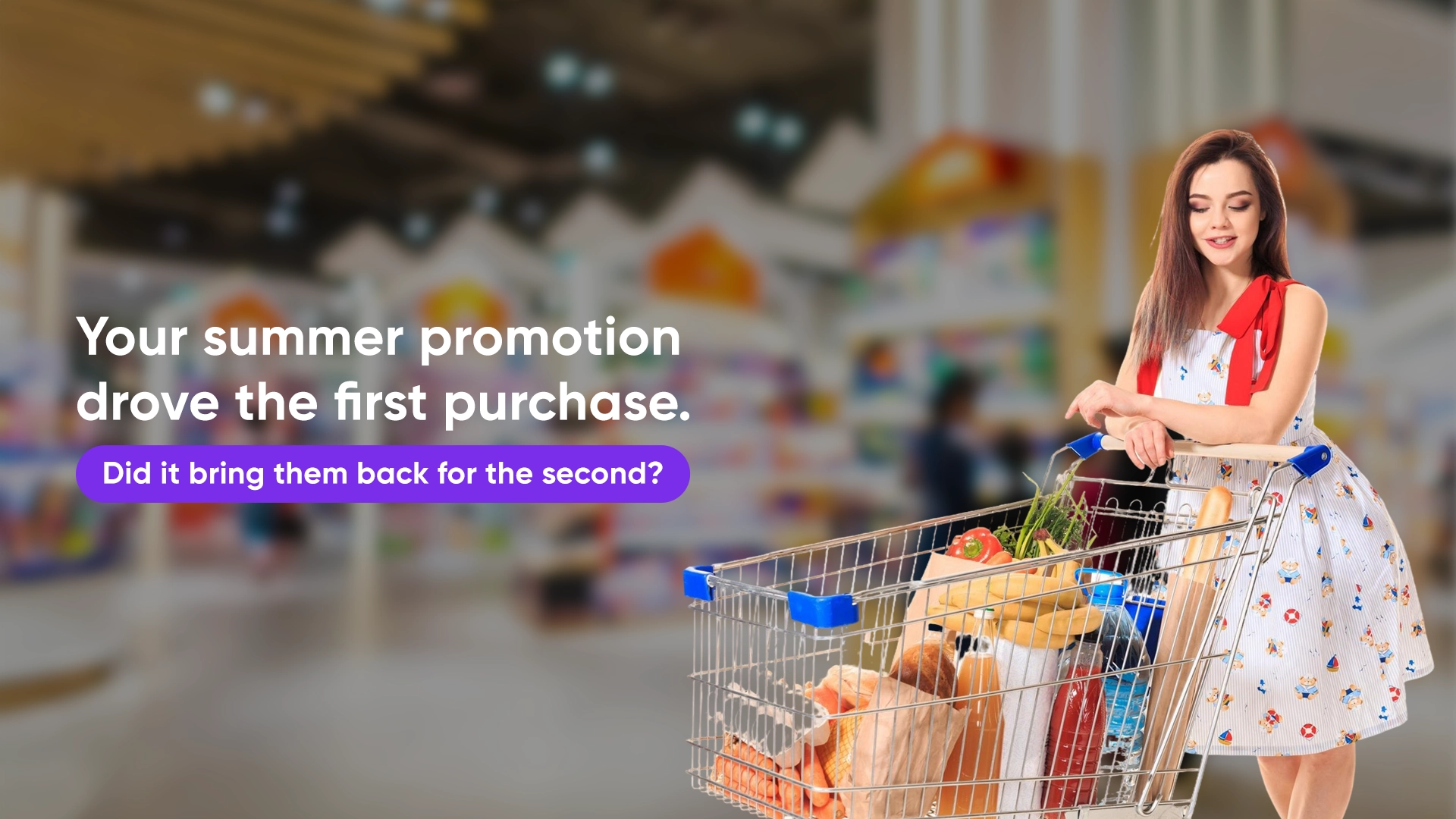
Walk into any supermarket in May. The cooling section is stocked, the beverage chillers are full, and nearly every second brand has a promotion running: a sticker promising cashback, a QR code offering a prize, a “buy 2 get 1” mechanic that someone approved in a planning meeting six weeks ago. It’s busy, it’s competitive, and for most brands, it works. Volumes pick up. The campaign delivers its numbers. The team moves on.
Then August arrives. And the question no one asks loudly enough is: where did those consumers go?
This isn’t just a beverages problem. It plays out the same way in personal care, in foods, in D2C brands planning their summer spike, in snack brands riding the school holiday window. Any brand that runs a seasonal promotion faces the same underlying challenge: summer promotion creates genuine demand, and most consumer promotions are designed to capture it once, not twice.
The issue is not the budget or the media or even the mechanic in isolation. It’s that most summer promotions are built entirely around the first purchase. The second is left to chance: to brand equity, to channel availability, to whatever the consumer happens to pick up next time they’re at the store. In a market where switching costs are low and shelves are full of alternatives, that’s a lot to leave to chance.
A well-designed summer promotion doesn’t just move product in May and June. It gives you a reason and a mechanism to stay in the consumer’s buying pattern through the season and beyond. That’s the gap this blog is about.
Before we get into this, here are a few relevant resources from Buyerr:
- Consumer Promotions — Buyerr’s full solution suite
- Cashback & Digital Coupons — Instant reward disbursement
- Retail & On-Pack Promotions — Scale across outlets
- Thematic & Seasonal Campaigns
- 1st Party Data & Consumer Insights
You can also explore:
- How to plan a high-impact consumer promotion campaign in India
- How Promotion ROI Analytics Helps Boost Your Campaign Performance
- Gamification in Loyalty and Promotions: What Works?
- Experiential Rewards: Strategies to Create High-Impact Customer Experiences
What we’ll cover in this blog:
- Why most summer promotion peak, then vanish
- The mechanics gap: trial vs. repeat
- How to layer repeat into your summer campaign
- Where repeat breaks down and how to fix it
- The data you’re leaving behind every summer
- The summer promotion playbook: a quick decision framework
1. Why Most Summer Promotion Peak, Then Vanish
The numbers that make summer attractive are real. India’s summer ad spend in 2026 is expected to spike by 30%, driven by the IPL–heatwave convergence across beverages, personal care, and seasonal categories. (Source: Storyboard18 / Rajiv Talreja, 2026) NIQ data from Q1 2025 shows home and personal care categories grew 5.7% in consumption, with traditional trade volumes rising from 5.0% to 6.2% year on year. (Source: NIQ India FMCG Growth Report, Q1 2025) The season pulls. The consumer is buying. The category is live.
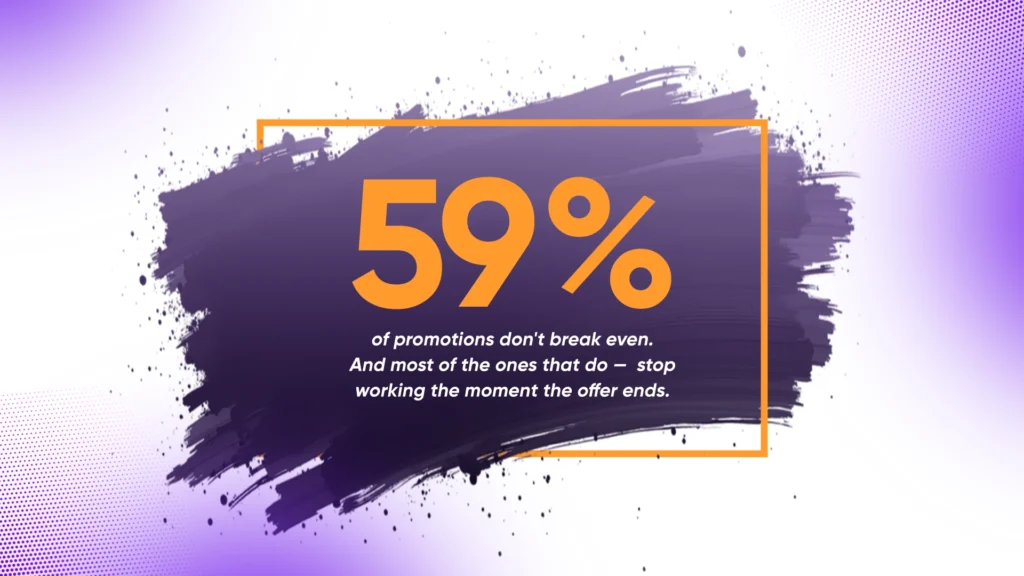
And yet, McKinsey estimates that consumer packaged goods companies spend about 20% of revenue on trade promotions, while 59% of promotions globally lose money. Understanding how to calculate break-even and ROI for promotions before a campaign goes live is where most brands fall short and summer is where that gap becomes expensive.
The mechanism behind this is fairly consistent. A brand launches a summer cashback. A consumer picks the product at the point of purchase, scans the code, receives ₹20 in their account, and moves on. Three weeks later, back at the same store, there is no second prompt. The incentive has been fully redeemed. The brand is off the consumer’s mind. Whatever they reach for next is determined by shelf position, habit, or whichever competitor happened to launch a promotion that week. The first purchase was earned. The second was left to luck.
A soft drinks brand studied by Accuris found exactly this. Promoting 1.5L bottles at a sharp discount drove strong short-term volume but caused a consistent dip in smaller pack sales post-promotion and eroded the base entirely once the offer ended. The promotion attracted deal-seekers, not loyal buyers. More summer spend, same consumer base on the other side.
This is the post-promotion dip and it is not accidental. It is the logical outcome of designing a campaign around the first sale and assuming the second will take care of itself. Effective promotion ROI analytics will show this pattern clearly in post-campaign reviews. In a competitive summer window, it rarely corrects itself without deliberate design.
2. The Mechanics Gap: Trial vs. Repeat
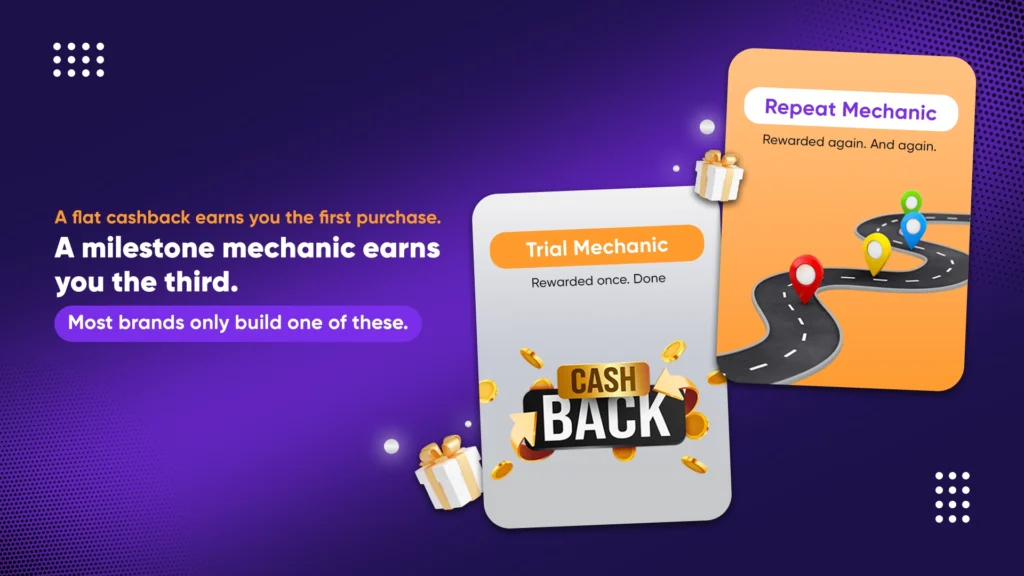
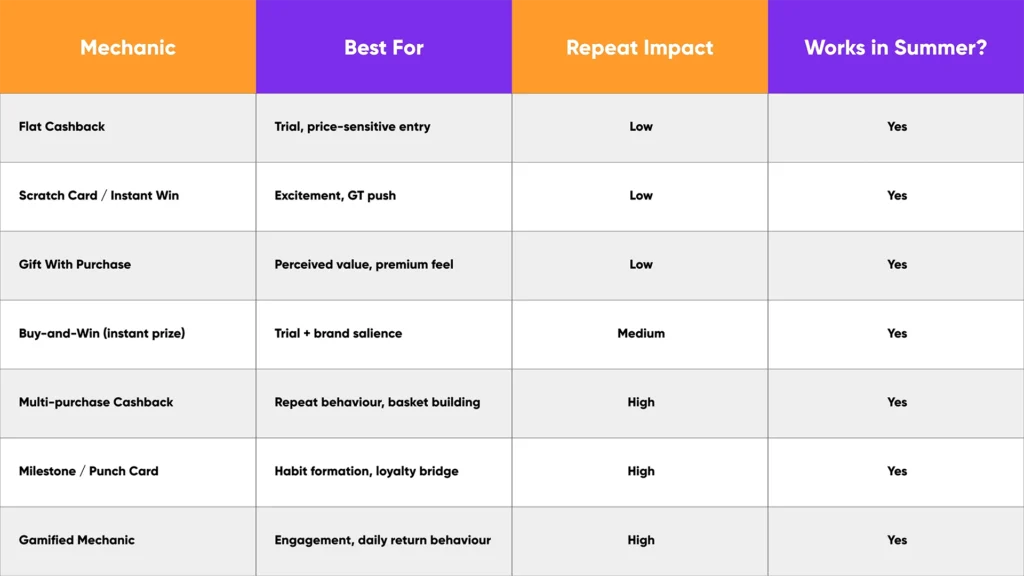
There is a distinction in promotion design that most planning conversations skip over: different mechanics produce fundamentally different consumer behaviours. A cashback on first purchase lowers perceived risk and makes the buy feel financially justified: it is excellent for trial. A milestone-based mechanic creates a structural reason to return: it is built for repeat. These are not interchangeable, and using one when you need the other is where most summer campaigns quietly underperform.
The psychology behind this is well-documented. Buy-and-try mechanics reduce the risk of the first decision. Cashback reinforces the feeling of reward after purchase. Gift-with-purchase and experiential rewards increase perceived value. Punchcard and milestone mechanics build habit by creating visible progress toward a future payoff. Each of these appeals to a different part of how consumers make decisions and only the last two are designed with the second purchase already in mind. (Source: Opia — The Psychology Behind Sales Promotions and Consumer Behaviour, 2026)
Research on on-pack promotions from the Indian market is fairly direct on this. Personalised, loyalty-linked mechanics where the reward scales with repeated behaviour drive a 35% increase in repeat purchases and a 22% lift in customer lifetime value compared to flat, one-time mechanics. The mechanic itself is doing the retention work, not just the acquisition. If you want to understand the full range of what works, the 7 most effective consumer promotions for B2C brands is worth reviewing before finalising your mechanic.
The fast rule: if your objective is trial, a flat cashback or a scratch card will serve you. If your objective is repeat purchase, you need a mechanic that has a second chapter built into it.
3. How to Layer Repeat Into Your Summer Campaign
The practical question most brand managers are actually asking is, ‘How do I build repeat into a campaign that still needs to drive first purchase?’ The answer is a two-layer structure: one mechanic that rewards the first buy immediately, and one that creates a structural pull toward the second.
Layer 1: The Hook
This is your trial mechanic. It needs to be immediate, simple, and visible at the point of purchase. A ₹15–₹30 UPI cashback on first purchase, a QR code on-pack that reveals an instant prize, or a “scan and win” element all work here. The bar is low: make the first purchase feel rewarding within minutes.
What consistently kills first-layer performance is friction. Apps that require registration before revealing the reward. Multi-step claim flows. Cashback that takes five to seven days to arrive. Digital mechanisms that deliver cashback and digital coupons via UPI within hours outperform traditional voucher or scratch-card mechanics by 20–30% on redemption rates because the consumer actually completes the process. Platforms that enable real-time, frictionless reward disbursement are not an operational detail. They are what determines whether the campaign actually generates the pull it was designed for.
Layer 2: The Return
This is where most brands stop designing. A few mechanics that work particularly well in a summer window:
Multi-purchase cashback: Instead of ₹30 on one purchase, offer ₹15 on the first and an additional ₹25 when they buy again within 30 days. The second reward is meaningfully higher, and the consumer already knows the redemption process. Friction is now minimal. The incentive is now forward-facing.
Milestone mechanic: “Buy any 4 packs this summer and unlock a ₹100 reward.” Each purchase moves the consumer visibly closer to a bigger payoff. This bridges naturally into consumer loyalty territory: the consumer is not just buying, they are participating. Research on loyalty mechanics in FMCG shows that a beverage brand offering a free product after every five purchases saw measurably higher return frequency because the consumer was tracking progress, not just making isolated purchase decisions. (Source: Benepik — Driving Repeat Sales in FMCG, 2025)
Gamification: A “spin once per purchase” mechanic where each buy earns one spin on a digital wheel keeps consumers engaged across multiple purchases without requiring heavy loyalty infrastructure. Gamified promotions and contests like this can lift engagement rates by up to 47%, and they build return behaviour around the mechanic itself, not just the reward. (Source: Benepik, 2025) For a deeper look at where gamification works and where it doesn’t, this analysis of gamification in loyalty and promotions is a useful reference.
The best summer promotions do two things at once: they lower the barrier to the first purchase, and raise the incentive for the second. Most only do the first.
4. Where Repeat Breaks Down and How to Fix It
Even well-designed two-layer promotions fall apart at execution. Three gaps show up consistently.
The reward is misaligned with the consumer. A ₹5 cashback on a ₹180 product is not motivating. An experiential reward like a movie ticket, a restaurant voucher, or a curated digital experience often outperforms cash discounts because it creates a memory around the brand rather than a transaction. The 2025 Indian marketing landscape showed a clear pivot toward deeper, more engaged rewards and incentives, with brand teams explicitly moving budget away from high-frequency, low-impact cash mechanics toward experiences that build affinity. (Source: Social Samosa, December 2025) Match the reward to what your consumer actually values, not what is cheapest to fulfil. Buyerr’s experiential rewards solutions are designed exactly for this: meaningful, brand-right rewards that do more than a coupon.
Redemption is too complicated. The claim process is where most summer promotions die. If a consumer has to download an app, fill out a form, wait five days for verification, and then receive a code they don’t know how to use, they will not complete the cycle. And a consumer who fails to redeem once will not try again. The benchmark in India today is real-time UPI cashback disbursal. If your redemption journey takes more than three steps or more than 24 hours, it needs to be redesigned before launch, not after the redemption rate comes back disappointing.
No signal after the first purchase. Once the consumer redeems their first reward, most brands go silent. There is no reminder, no nudge, and no communication that says, “You’re two purchases away from your next reward.” A single WhatsApp or SMS touchpoint sent 10 to 14 days after the first redemption, showing the consumer their progress toward the next milestone, can move second-purchase rates meaningfully. This is not a big technology problem. It is a planning problem. The consumer loyalty infrastructure to manage these touchpoints exists; it simply needs to be built into the campaign plan from the start
5. The Data You’re Leaving Behind Every Summer
There is a second cost to promotions built only around trial, and it is less visible than the post-promotion sales dip. It is the consumer data you never collect.
Every summer campaign that runs without a structured data capture mechanism is a missed opportunity to build a first-party consumer database — one that can inform Q3 festive targeting, product development, channel decisions, and the following year’s summer plan. A consumer who redeems a summer cashback has told you their phone number, their purchase location, their preferred pack size, and the date and frequency of their purchase. If your promotion is structured to capture that, you walk away from the season with a database of verified buyers. If it is not, you have a sales uplift number and nothing else.
This matters more in 2026 than it did three years ago. Third-party data is becoming less reliable. Media platforms are more expensive and less precise. The brand that owns a clean, consent-based consumer database has a structural advantage and the summer promotion window, when purchase intent is naturally elevated and consumers are actively engaging with on-pack mechanics and digital coupons, is one of the best available opportunities to build it.
The first-party data and consumer insights infrastructure that makes this possible does not need to be built separately from your campaign. It should be embedded into the promotion mechanic so that every QR scan, every cashback claim, and every reward redemption is simultaneously a data event that tells you something useful about the consumer. Brands that do this well come out of summer with an asset. Brands that don’t come out with a report. You can also use Buyerr’s consumer research capabilities to build on what that data tells you: turning a promotion into an insight engine.
6. The Summer Repeat Promotion Playbook: Quick Decision Framework
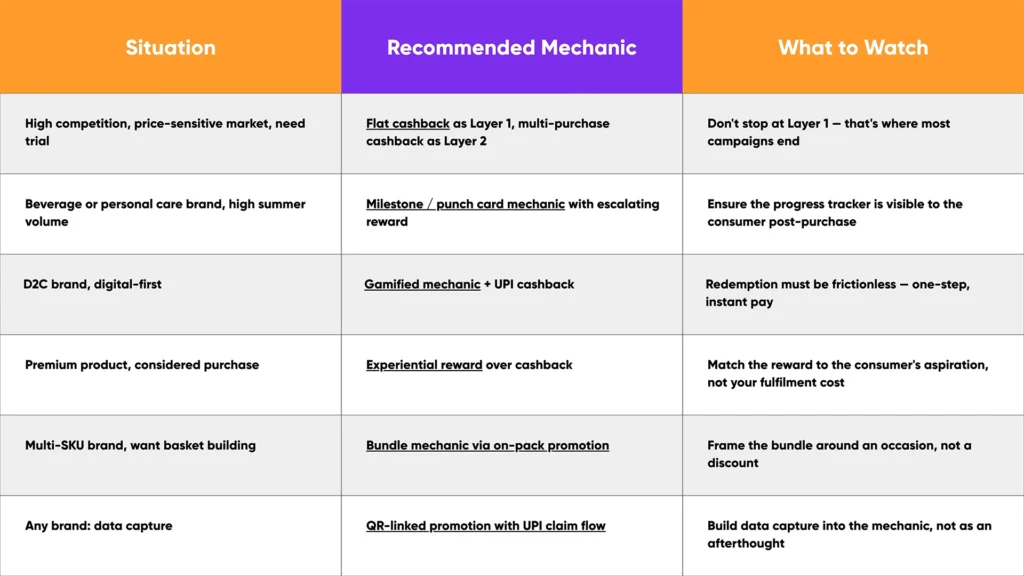
The fast decision rule:
- If your campaign has no Layer 2 → add a return mechanic before launch
- If your redemption journey takes more than three steps → simplify it, and look at real-time cashback disbursal as the baseline
- If you have no consumer touchpoint planned after first redemption → plan one
- If you are not capturing consumer data through your promotion → you are spending without learning. Here’s how to fix that.
In Closing
Summer will always be a volume quarter. That is not going to change. What can change is how brands use it: whether they treat it purely as a sales window to be maximized in May and June, or as a structured opportunity to build a consumer relationship that holds through July, August, and beyond.
The brands that tend to come out of summer in the strongest position are not always the ones with the largest promotional budgets. They are the ones who designed their mechanics with the second purchase already accounted for. The ones who did not leave the return journey to chance, or to brand equity alone.
A well-built seasonal campaign doesn’t just move product. It gives you something useful to work with for the rest of the year: a database of verified buyers, a behavioural insight, a consumer who already trusts your redemption process and is partway toward their next reward. That is the difference between a promotion that performs and one that simply passes.
If you found this useful, these related reads may also be worth your time:
- How to Plan a High-Impact Consumer Promotion Campaign in India
- Emerging Trends in Consumer Promotions and Loyalty in 2026
- How Promotion ROI Analytics Helps Boost Your Campaign Performance
- Loyalty Program Best Practices for Retail Brands
- Gamification in Loyalty and Promotions: What Works?
- The 7 Most Effective Consumer Promotions for B2C Brands
- How to Calculate Break-Even and ROI for Promotions and Incentives
Interested in building promotion mechanics that drive repeat purchase? Explore how Buyerr helps brands design campaigns that work beyond the first sale. Or get in touch directly to discuss your summer activation plan.